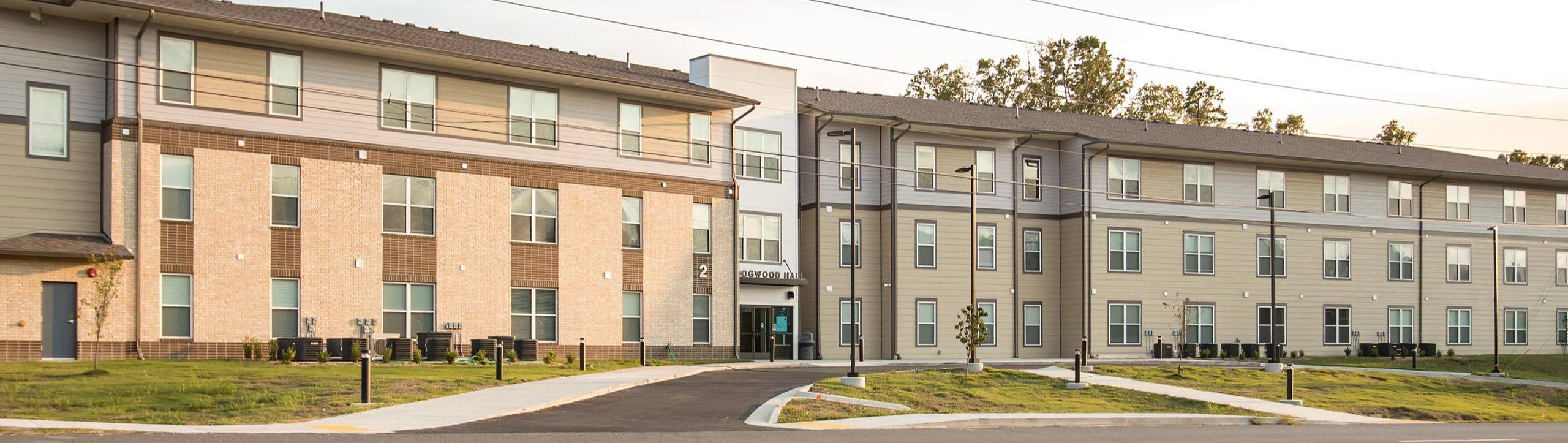
The following policies reflect the values of National Park College and the Office
of Residence Life and Housing and were implemented to uphold the College’s mission:
Learning is our focus; student success is our goal.
National Park College’s residential facilities have established community standards,
intended to promote the well-being and rights of all community members as well as
maintain the facilities and surrounding areas in which the community exists. The Student
Housing staff lead by example in upholding the community standards.
Rights & Responsibilities
NPC’s Student Housing Office is committed to providing residents with a welcoming
environment rooted in the institution’s values of Access, Excellence, Accountability,
Collaboration, and Respect. Guided by aforementioned values, all are afforded the
rights and responsibilities related to your interactions with other members of our
residential community.
The right to be treated, and the responsibility to treat others with fairness and
mutual respect;
The right to a safe and secure room, free from instances of harassment and without
reasonable fear of harm, intimidation, or distress;
The right to report instances of harassment;
The right to learn, study, and sleep in your room free of interference;
The right to adequate privacy, and the responsibility to respect the privacy of others;
The right to have your property respected, and the responsibility to respect and maintain
the condition of the physical facilities, equipment, and property of others;
The right to have direct access to professional staff and Resident Assistants (RAs)
who can provide assistance, guidance, and support as needed, and to utilize those
staff members should violations of the roommate agreement, Student Housing Policies,
or Student Code of Conduct occur in order to seek options for a timely resolution;
The right to have living space concerns addressed with you directly and the responsibility
to communicate with your roommate(s) and update a roommate agreement should a change
in your preferences or circumstances occur;
The responsibility to ensure the safety of our community by maintaining cleanliness
and by following all guest policies;
The responsibility to comply with reasonable requests made by Student Housing staff
or College officials; and
The responsibility to hold yourself and your roommate(s) accountable to all expectations
and standards set for the space through a roommate agreement and to the expectations
for all members of the NPC and Student Housing community.
Living with a Roommate(s)
Making the most of living in your Student Housing community starts with getting settled
in and getting to know your roommate(s). Developing a healthy relationship will help
make living together more comfortable. While you and your roommate(s) are not required
to become friends, sharing a living space will require you to interact with one another
on a daily basis.
Before You Move In
The relationship you have with your roommate should start before move-in day. Prior
to arriving on campus, try discussing what each of you plan to bring and what kind
of relationship you’re hoping to have with one another.
As excited or nervous as you may be to meet your roommate(s), keep in mind that social
media may not provide an accurate illustration of others. Grant yourself the opportunity
to get to know this new person for who they truly are.
ACTIONS
How early will you be waking up?
How late will you be staying up?
How often do you plan to be in the room?
What do you plan to use the room for?
When and where do you plan to study?
What kind of environment do you need to study?
SPACE
How often will we clean the room/apartment?
Who will clean what?
What items are you willing to share?
What items are you not willing to share?
What is your ideal temperature for the room or apartment?
GUESTS
How do you feel about having friends and visitors over?
How frequent do you plan to have guests and visitors over?
What are your thoughts on having overnight guests?
COMMUNICATION
How should we address conflicts between us?
How will we confront each other?
Does in-person communication work better for solving problems?
How will we involve our Resident Assistant in working through our conflicts?
Living Together
Once you have made it to campus, take time to get to know your roommate – this can
be as simple as sharing a meal in the dining hall, attending a campus event together,
or spending time together in your room or apartment.
Roommate Agreement
Residents are required to complete a roommate agreement within the first month of
living together. The roommate agreement covers topics including ideal room temperature,
guest preferences, privacy, and more. It is important to take this process seriously
and to be honest and realistic during your roommate agreement conversation. These
agreements serve as a conversational starting point and should be revisited frequently
as relationships between individuals grow. The agreement cannot conflict with stated
Residential Life or College policy but can be more restrictive based on the voluntary
agreement of all roommate(s). Additionally, failure to abide by the roommate agreement
does not equate to a policy concern but can warrant follow-up from Student Housing
staff.
Student Housing Policies have been carefully written and enforced in consideration
with federal, state, and local laws and are for the purpose of providing a safe and
secure living environment for residents, their guests, and visitors.
Residents and guests are responsible for becoming familiar with and adhering to the
following policies to create a community that is conducive to living and learning.
These policies apply to all residents and their guests when they are in or on the
residence hall property and are enforceable while participating in housing sponsored
activities on or off campus. Housing’s commitment to developing good citizenship does
not end at the boundaries of the residence hall. Residence hall students serve as
ambassadors of our institution. Any alleged violation of housing or College policies
may result in follow-up through the College’s student discipline process, the results
of which may jeopardize your housing agreement and/or status as a student at the College;
may result in disciplinary sanctions; or may be subject to legal action.
Appliances & Electronics
Every unit in Dogwood and Redbud Hall is equipped with a full-size refrigerator, microwave,
kitchen sink, high-speed internet, water, heat, and electricity. Each building has
an in-building laundry room and one or more community kitchens (Dogwood 2nd Floor, Redbud 2nd and 3rd Floors) that hosts a kitchen sink, stove, dishwasher, and microwave.
Residents who are uncertain if an appliance or electronic device is allowed on campus
should contact the Student Housing Office prior to bringing it to campus.
Small appliances and electronics are allowed under the following conditions:
Appliance does not have an exposed heating element or flame
Appliance does not create/emit grease
Appliance does not override the electrical outlet
Appliance does not interfere with NPS’s Wi-Fi signal
Appliance does not require professional installation.
The following items are allowed in the residents’ units:
Coffee maker with an automatic shut-off
Minifridge up to 5 cubic feet with <150 watts
Slow cooker with an automatic shut-off
Air fryer with an automatic shut-off
The following items are not allowed in the residents’ units:
Candles and incense
Electric skateboards, scooters, and self-balancing boards
Hot plates
Indoor/outdoor grills
Ice makers
Portable air conditioning units
Space heaters
Animals
For the comfort of all residents, pets (animals), including visiting pets, are not permitted within the residence halls. A fee will be assessed to a resident’s student account
for costs associated with any presence of unauthorized animals documented within Student
Housing.
The following are the only exceptions:
Pets – Fish in a 10-gallon fish tank or smaller are allowed in the residence halls. All
other pets are not permitted.
Service Animals – In accordance with the Americans with Disabilities Act, service animals are allowed in all parts of residential communities.
Assistance Animals – In accordance with the Fair Housing Act, assistance animals, including Emotional Support Animals, are allowed in a student’s assigned room.
Both service and assistance animals must have proper documentation submitted to and
approved by Mandee Harper, Disability Specialist, before being brought to campus. For more information, contact Mrs. Harper at (501) 760-6388
or email mandee.harper@np.edu.
Fees may be assessed for damages caused by authorized or unauthorized animals including
but not limited to damages to furnishings/walls/floors, pest control treatment, and
cleaning.
Disruptive Behavior
Behavior that interferes with the normal functioning of the Residence Halls or unnecessarily
impedes the rights of students, residents, or staff is prohibited. This includes but
is not limited to:
Behavior where the safety of any person or property is compromised
Sports such as basketball, football, soccer, frisbee, golf, lacrosse, hockey, gymnastics,
wrestling, skateboarding, skating/roller blading, “chase” and/or “tag”, and similar
activities
Water fights
Pranks
Actions of a person or group that require the response of Student Housing staff members
Grills and Grilling
Charcoal grills have been strategically placed behind the residence halls to offer
students an alternative method to cooking. It is the resident’s responsibility to
properly clean the grill before and after using them. Storage of flammable items are
not permitted within the resident’s room. This includes charcoal, lighter fluid, and
propane tanks.
Noise & Quiet Hours
Courtesy Hours – Courtesy hours are in effect 24 hours a day within the residence halls. During
courtesy hours, residents should be mindful that their noise level is to remain at
a respectful level.
Quiet Hours – Quiet hours are observed from 10 p.m. to 9 a.m. daily within the residence halls.
Quiet is defined as “sound that cannot be heard in another room with the door and
windows closed.”
Property Misuse & Damages
Damages – Residents are held responsible for damages incurred accidentally, carelessly, or
maliciously to their room and any public spaces such as kitchens, study rooms, and
game lounges. Appropriate damage charges will be assessed to the resident’s student
account.
Vandalism – Vandalism is the intentional, willful, or malicious destruction, defacement, or
damage to property without the owner’s consent. Vandalizing campus property or another
resident’s property is prohibited. Appropriate damage charges will be assessed to
the resident’s student account.
Residents and guests are not permitted to intentionally touch or tamper with belongings
or property of another individual unless authorized by that individual.
Residents are ultimately responsible for maintaining the cleanliness of their personal
living rooms, bedrooms, kitchens, and bathrooms.
Daily Cleaning Suggestions – Daily cleaning includes washing dishes, wiping countertops, and taking out the trash.
Weekly Cleaning Suggestions – Weekly cleaning includes sweeping and vacuuming the floor, cleaning and sanitizing
the showers and toilets, cleaning out the refrigerator, and other general cleaning.
Custodial staff will clean designated common-areas in the residence halls such as
lobbies, hallways, stairwells, elevators, study rooms/classrooms, and public bathrooms.
Garbage, Recycling, and Waste Removal
Residents are responsible for discarding their trash in the dumpsters assigned to
their residence hall. All trash must be placed in a garbage bag and tied off before
being placed in the dumpster. Garbage may not be placed in the hallways, stairwells,
or common areas. Failure to appropriately discard trash will result in a cleaning
fee being assessed to the resident’s student account.
Community Trashcans – There are trash cans located in each community space intended to serve that individual
community space. Residents are expected to be mindful of the items that they are discarding.
(i.e., throwing away sheets of paper or snack wrappers in the study and game lounges;
throwing away packaging and left-over foods in the kitchens). Placing personal trash
bags and other room trash in the community spaces is prohibited.
Food – Garbage disposals are available in the community kitchens and should only be used
for small food particles. Bulky, solid, and other food products cannot be placed down
any sink drain (i.e., kitchen, bathroom, etc.).
Personal Hygiene Products – Personal hygiene products may not be flushed down the toilet. All items must be
disposed of via trash bag.
Recycling – In effort to reduce our carbon footprint, recycling bins have been placed in residence
halls. Residents are encouraged to recycle their paper, aluminum, and plastic items.
Placing personal trash bags and other room trash in the recycling bins is prohibited.
Residents found placing trash in the recycling bins will be assessed a cleaning fee
to their student account.
Decorations
Residents are encouraged to decorate their living space by adhering to the following
guidelines:
No item may be permanently affixed to, cause damage to, or leave adhesive residue
on any wall or door
No item may be hung using adhesive products. Only push pins may be used, no nails
Empty food or drink containers of any kind must be disposed of and are not to be used
as decoration
Live trees and wreaths are not permitted in or near Residential Life communities
Contact paper, including wall decals, may not be used within Residential Life communities
Doors
Door decorations cannot obstruct the room number, peephole, locking mechanism, and/or
doorknob and are subject to approval by the Student Housing Office. Any decorations
or other messaging that violates housing policy or student code of conduct will be
removed with written notice but without resident approval.
Floors
Adhesives or floor-affixing products, including those labeled or advertised as temporary,
removable, or surface safe, may not be used within Residential Life communities.
Walls
All items hung on walls must not leave adhesive residue nor marks of any kind, including
chipped paint. No items may be hung from a room’s ceiling or life safety equipment
including alarms, detectors, sprinkler heads Residents are not allowed to mount electronics
to walls
Windows
Curtains are permitted to be placed above the windows using tension rods only. Curtain
rods that require screws for installation are not permitted. Additionally, residents
are prohibited from placing anything other than small plants in or on windows that
may be viewed from the outside of the building.
Furniture
Residents are responsible for all furniture and its condition upon checkout of their
space. All provided furniture must remain within the assigned room. Furniture must
remain within the space where it is placed within the residence hall, including common
areas such as lobbies, game lounge, study rooms, etc.
Lofting and Bunking of Beds
In Triple-Occupancy rooms, there is a set of bunked beds. Residents wishing to loft,
bunk, or un-bunk their beds can submit a work order to the Student Housing Office.
Residents are prohibited from lofting and/or bunking beds without assistance and approval
from Student Housing. Damage accrued as result of attempting to loft and/or bunk beds
on your own will result in damage charges.
Shower Curtains
The Student Housing Office only provides a shower rod in each bathroom. Shower curtains,
liners, and hooks are not provided by the Student Housing Office. It is the resident’s responsibility to put
up and remove their own shower curtain and hooks. This policy has been implemented
with growth and other bacteria prevention in mind. Appropriate charges will be assessed
to the resident’s student account if a shower curtain rod is damaged.
Room Occupancy
If a room is occupied at less than capacity, residents are not permitted to occupy
the whole space with personal belongings or deconstruct furniture. The vacant portion
of the room is to be left ready for a new occupant in the case of a new housing agreement
or room change request.
Street Signs and State and Local Property
Displaying and possessing street or traffic signs, signals, markings, cones and/or
barriers in Residential Life communities is prohibited.
We welcome residents to feel comfortable bringing guests to enjoy the residential
community and the greater National Park College campus. Residents may have a guest
visit their space only upon agreement of all roommates and must be escorted by the
resident when visiting common areas. A roommate has the right to reasonably ask a
guest in a shared area to leave at any time.
The presence of a guest in a Residential Life community must not compromise the personal
or academic well-being of roommates or other building residents.
Guest – Guest is defined as any person who does not live in a specific room, including
family members, parents, or other residents who live within the building.
NPC Affiliated Guest - NPC students who are guests of the residence halls must be escorted to the room or
apartment by the resident host. When having another resident visit a space, the resident
of that room is expected to be present at all times. Furthermore, a resident is never
to enter a room that they do not live in without the resident of that space being
present.
Non-NPC Guest - Guests who are not NPC students must meet their resident host at the residence hall’s
front door and be escorted at all times.
Each guest must have a current resident host and be escorted at all times within the
residence halls. Residents are responsible for notifying guests of the College’s and
Residence Life and Housing’s policies and procedures and will be held accountable
for the behavior of their guests.
Guests will be asked to leave the building or community by Student Housing staff members
if they are found to be disrupting the community or in violation of Student Housing
or NPC policy.
Cohabitation
Cohabitation exists when a person who is not assigned to a particular residence hall
room uses that room or apartment as if they were living there. Cohabitation is not
permitted.
Escort Policy
All guests must adhere to courtesy and quiet hours and be escorted by their resident
host within the residence halls and cannot be left alone anywhere within the building,
including the room when a resident host is not present.
Overnight Guests
Overnight guests refer to both visitors and current residents. Overnight guests are
permitted with roommate approval, which must be secured prior to the guest’s arrival
and are limited to guests 18 years of age or older. Overnight guests are allowed to
stay for a maximum of two (2) consecutive nights, limited to four (4) nights per calendar
month.
Subleasing
Residents are prohibited from subleasing their room to another person through any
means, including rental websites and/or apps.
Bicycles
Bicycles may be stored in a student’s personal residence hall room with the expressed
permission of the roommate(s) (this is a privilege and not a right). If stored in
a room, the bicycle may not be hung directly from the wall, ceiling, or from any exposed
structure. Bicycles being transported through the residence halls must be walked or
carried.
Electric Scooters & Motorcycles
Scooters and motorcycles must follow parking and traffic rules and are not permitted
on sidewalks. Scooters and motorcycles are not permitted inside of the residence halls
and must be parked in accordance with city ordinances.
Electronic Skateboards
Electronic skateboards, including self-balancing boards/scooters, and any similar
personal transportation equipment which utilize lithium-ion batteries are prohibited
from being used, stored and/or charged in any residence hall. Only ADA-approved, Power-Driven
Mobility Devices are permitted. Contact Mandee Harper, mandee.harper@np.edu, with
any questions regarding these devices.
Skateboards & Skates
Skateboards and skates may be stored in a student’s personal residence hall room (this
is a privilege and not a right). Skateboarding and skating is not permitted in the
residence halls.
Candles & Incense
Burning candles, incense, and wax is not permitted in the residence halls. Battery-operated
candles, candle warmers, potpourri, oil scented reed diffusers, room sprays, and scented
electrical plug-ins are permitted.
Doors
Tampering with, forcing, or disabling a door’s locking mechanism is prohibited. For
the safety of all residents, propping a unit door, main entrance, or locked door and
leaving it unattended is prohibited. Any resident found repeatedly propping doors,
unit or entry, will be assessed a security and safety violation fee to the resident’s
student account.
Elevators
Tampering with elevator safety systems, placing furniture in or in front of elevators,
or engaging in activities that damage or interfere with the operation and safety of
the elevators is prohibited.
Evacuation
Residents and guests are required to evacuate a building when an alarm sounds, emergency
flashing lights have been activated, or when instructed to do so by NPC staff members
or emergency personnel. Re-entry into a building is prohibited until approved by NPC
staff members or emergency personnel.
Flammable Items
Items with an open flame or heating source such as lighters, charcoal, lighter fluid,
and other flammable items are not allowed within 25-feet of the residence halls.
Personal Safety Items
Residents and guests are allowed to possess items such as pepper spray and mace for
personal safety within residence halls. However, the use of these items in non-emergency
situations that results in intimidating or harming another person is prohibited and
may result in the right to personal safety items being revoked.
Safety Equipment
Safety equipment including AEDs, sprinklers, smoke detectors, emergency doors, heat
sensors, fire alarm pull stations, fire exit signs, fire extinguishers, hoses, alarm
bells, and any other safety equipment is necessary to safeguard residents. Deactivating,
handling, using, or interfering with any fire or safety equipment for any reason other
than an emergency is prohibited.
Sprinkler System
Residents are prohibited from hanging items from, covering, or otherwise tampering
with fire sprinkler devices and emergency doors.
Threat or Harm to Self or Others
Self-harm gestures, behaviors, or expressions that affect or disrupt the educational
processes or the safety of the College community are not permitted. Actions that would
be considered likely to pose a threat, discomfort, or harm to others are not permitted.
Such actions include, but are not limited to: inflicting verbal, mental, or physical
harm upon oneself or others; bullying, including cyberbullying; stalking; harassment;
sexual assault.
Weapons
Possession and use of firearms (including but not limited to air pistols, BB guns,
and paint guns), facsimile weapons (any replica, toy, starter pistol or other object
that bears a reasonable resemblance to or that reasonably can be perceived to be an
actual firearm), ammunition, explosives, fireworks, knives (other than kitchen utensils),
or dangerous weapons is prohibited in or around the residence halls and National Park
College.
Windows
Residents are not permitted to throw anything from windows within the residence halls.
Screens must remain on windows at all times. Additional information regarding windows
policies can be found in the decorations section.
Keys and Locks
For the safety of all residents and their belongings, residents are encouraged to
lock the doors to their rooms and ensure the door is shut to the unit when not present.
Residents are NOT permitted to install their own locks in their rooms, apartments,
and bathrooms. Residents must always have their room keys, mobile phone, and NPC ID
card on their person. Entry to buildings and units is provided by a mobile access
app on the resident’s phone and is to be used/possessed only by the resident. Losing
a key will result in a lost key fee being assessed to the resident’s student account.
Card Access and Keys
The mobile app Vingcard Mobile Access is used to access the residence halls and the resident’s assigned unit. If a resident
does not have a phone that is not compatible with the app, a hard key can be programmed
and issued. Standard keys are used to gain access to the resident’s room. Losing a
room or unit key will result in a lost key fee being assessed to the resident’s student
account.
Copying of Keys
Making copies of keys issued by the Student Housing Office is prohibited and may result
in the immediate loss of housing privileges.
Lockout Policy
Resident Assistants are able to assist residents accessing their unit if they are
locked. Lockouts are documented with repeated lockouts resulting in a Lockout fee
being assessed to the resident’s student account.
Lost or Damaged Keys
Residents must immediately report a lost or damaged key to the Student Housing Office
for proper replacement. A lock and key replacement charge will be assessed to the
resident’s student account. Upon moving out of the residence halls, residents are
required to return all keys that have been issued. Failure to return a key (room,
mail, or scan access) will result in a Lost Key fee being charged to the resident’s
student account.
Personal Surveillance Equipment
Aligned with the right and responsibility of reasonable privacy, personal surveillance
equipment is prohibited in the residence halls. Furthermore, recording individuals
with surveillance or cell phones without their knowledge or consent can be a violation
of federal and state law and is prohibited. If found installed, recording devices
will be seized and not returned.
Solicitation
Commercial solicitation, such as door-to-door sales, leaving flyers or menus on or
under doors, is prohibited within the residence halls.
Trespassing
There are restricted areas that residents and guests are not allowed to enter such
as the roof and maintenance closets/hallways. Residents are also not allowed to enter
another resident’s room without permission from and the presence of that resident.
Alcohol Policy
National Park College is an alcohol-free campus. The unlawful manufacture, distribution, dispensing, possession, consumption,
or use of alcoholic beverages (including, but not limited to, fermented malt beverages,
intoxicating liquors, etc.) is not permitted on the College campus and in the residence
halls. Restriction of alcohol is in line with state law and designed to ensure the
safety and well-being of all residents.
Violations of the Alcohol Policy
The following are additional violations of the alcohol policy:
Possessing, distributing, selling, or consuming alcohol on campus
Being in the presence of alcohol and not reporting (including a roommate possessing
in your unit)
Consuming alcohol off-campus and returning to the residence halls under the influence
of alcohol
Engaging in drinking games, such as beer pong in which alcohol can be reasonably assumed
present
Displaying empty bottles for decorations
Possessing kegs, beer balls, and other paraphernalia
Drug Policy - Medical Marijuana
Although Arkansas state law permits the use of medical marijuana, National Park College
complies with the Drug-Free Communities and Schools Act as well as the Drug Free Workplace
Act, which require a drug-free campus environment or risk losing federal funding such
as financial aid. Any resident with a medical marijuana card is prohibited from possessing,
consuming, or distributing marijuana on campus. Please refer to the Drug Policy for
guidance and understanding of potential violations.
Drug Policy
National Park College is a drug-free campus. The unlawful manufacture, distribution, dispensing, possession, consumption,
or use of controlled substances (including, but not limited to narcotics, stimulants,
hallucinogens, prescription drugs etc.) is not permitted on campus and in the residence
halls.
Violations of the Drug Policy
The following are additional violations of the drug policy:
Possessing, distributing, selling, or consuming drugs on campus
Being in the presence of drugs and not reporting (including a roommate possessing
in your unit)
Consuming drugs off-campus and returning to campus under the influence of controlled
substances
Possessing bongs, pipes, vaporizers, “roach clips”, and other drug paraphernalia
Displaying flags and/or other articles with drug-related content, brandings, or logos
Behavior or Misconduct While Under the Influence
Intoxication and/or abuse of alcoholic beverages, marijuana, or other drugs is not
permissible as an excuse for other unlawful behavior or misconduct.
Acutely intoxicated students will not be left in the care of other students, including
Housing staff. Students will be referred to appropriate health care professionals
and/or law enforcement.
Tobacco, Vaporizers & Electronic Cigarettes
The use of tobacco, tobacco products, vaporizers/vapes, and electronic cigarettes
is prohibited on campus and within residence halls. Residents may use these items
off-campus or within a personal vehicle with closed windows on campus. Residents will
be assessed a fee to their student account in incidents where the room, apartment,
or building alarm system is activated due to the use of these products.