NPC's executive leadership team begins formal exploratory discussions with the University of Arkansas (UA) System.
For more information, visit the NPC-UA Merger information page.
December 2, 2014
In early December, National Park Community College hosted an event coined “Community College Work$.” That name was coined after a lot of discussion, and we landed on adding the word ‘works,’ with the dollar sign, to signify what the community colleges across the state of Arkansas do for its citizenry, its students, the state, and the workforce.
According to a study done by the American Association for Community Colleges, for every dollar taxpayers invest in the community college, the return is about seven dollars. This return is measured in increased earnings by graduates, increased productivity by businesses who have a better trained workforce, and taxes generated by this increase in earnings and productivity. This includes savings in the social services sector—such as individuals who avoid public assistance and stay out of the judicial system because they are gainfully employed. The Arkansas Community College (ACC) association estimates this saves Arkansans over $16M annually.
The return on investment for graduates is also significant. According to ACC, the ROI students will receive is 17.9%. Students will fully recover their investment, and be paid back over six times what they invested.
According to the US Bureau of Labor Statistics, associate degree holders earn, on average, 19 percent more salary, and are less likely to be unemployed compared to those with no post-secondary education.
We have countless examples of local success stories as well. While these are too numerous to list here, I am betting that you know someone who is a graduate of National Park Community College whose success story could serve as a shining example of community and local benefit.
I don’t think I need to provide additional evidence to persuade you that community colleges are a great bargain and are deserving of policy making support. Although I’ve been here but a short time, the level of support you have provided is obviously high by comparison, and much appreciated. Your support has resulted in a College which enrolls a total of about 3,000 credit students each semester, and about 3,500 workforce students annually. Last year, we awarded 659 credentials, including both associate degrees and industry relevant credentials.
These are very impressive figures.
Consequently, I think the challenge here is increasing—by exponents—the numbers of students and citizens who can be impacted by our community college. So, I have some thoughts on how we might build on what is already a strong community fabric of support.
In my short time here I’ve had people say to me that “not everyone needs to go to college.” I want to politely rephrase this statement. I think we should repeat, “Not everyone needs to go to a university, but everyone does need to go to college.” It’s my opinion that many more should begin with community college.
Our Goals
Here’s where NPC is headed:
Student Success
First, we need to focus on how we can help our very diverse student body be more successful. We are setting new standards for student retention, certificate attainment, degree attainment, and transfer to four year universities. These are outlined on the seven “High Priority Objectives” which our Board of Trustees has reviewed and I expect will approve at the December meeting. You’ll notice these are benchmarks, and you might be pleasantly surprised by our production to this point. But, I expect that over time—if we work together—we can significantly increase certificate and degree completion in Garland County. Among our community college brethren, we are among the best. However, I envision setting new records for student success.
Rebranding
There are many efforts we are undertaking to move this along. We need to remake our image and, at the same time, redefine what the term ‘college’ means to our audience. The first step in this process is that we’ll undergo a re-branding effort designed to more accurately depict what we do so that students, employers, community leaders will have a clearer picture of what it means to go to college.
The challenge is to collaborate and, in effect, redesign ourselves to be more precisely what our community needs without regard to what community colleges have traditionally been. We’re going to keep the good thing going, and I envision that we’ll recast our image onto the minds and hearts of our audience. But, to be sure, our greatness depends on redefining what OUR College needs to become to best serve OUR local needs.
Transfer Partnerships
We are going to be deliberate in enhancing partnerships with four year universities by measuring and increasing transfer. In 28 states, community colleges are offering workforce relevant four-year degrees. In Arkansas, we can do that by strengthening partnerships with universities in such a way that students do not lose credit by transferring. Our plan is to make a significant investment in strengthening and expanding on these opportunities. While associate degree holders improve their earning potential, those with a bachelor’s degree earn even more, and are less likely to be unemployed. I envision National Park Community College being more aggressive in unearthing and providing opportunities for seamless transfer to advanced degrees and reinvesting these gains toward increased educational attainment in Garland County.
Workforce Development
We’re going to be even more ambitious in partnering with businesses to provide them with a trained, credentialed workforce, and also work with them to train their incumbent employees so that our local corporations gain a competitive advantage. The workforce development mission of the community college sometimes gets relegated to a back seat. We’re going to move it to the front row.
New Programs
Our aspiration is to create new degree and certificate opportunities for students through a number of delivery options. Our current array of programs is broad and robust, and also can stand a little pruning. We’re already engaging our K-12 partners, community leaders, training partners and others to refine these pathways so that we optimize graduate competence and completion.
Diversity
Diversity is the life blood of the community college. We are a welcoming place, but we aspire to be even more welcoming. It’s a key element in preparing students for the global economy in which we all need to thrive.
I believe that taking these steps, along with a few additional initiatives which are not quite ready for prime time, will drive growth, student success, and degree attainment.
Now, allow me to sound the call to action.
Our Needs
We have the wherewithal to get started, but we do not have the resources to finish the job. We are certainly in the ‘good’ category, but our community deserves to be in the ‘great’ category, and our aspiration is to be the best.
In order to exact a greater return, we will need to make a greater investment. It isn’t obvious to me at this moment where those investments lie, but I anticipate there are key areas to which we’ll need to attend.
Infrastructure
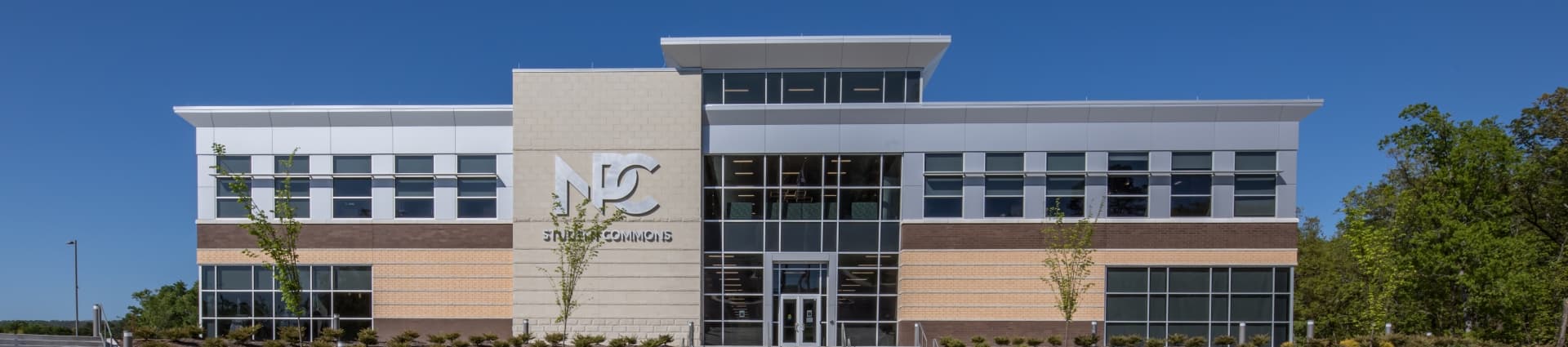
The first is infrastructure. We’re blessed with a beautiful campus—in fact we may be blessed with the most aesthetically pleasing learning environment in the country. We are also fortunate to have some state-of-the-art facilities that we can showcase, and this is an advantage in helping us to attract students.
However, there are some significant improvements that need to be made. About half of our capital space is inadequate and in need of re-construction or repurposing. Tailoring the learning environment to mimic the professional environment will lead to increased student attainment, and improve the quality of the workforce. We have managed to keep aging labs together, but we will not be able to do that for much longer. Our learning environment needs to be addressed in comparison to what the competition can provide.
Faculty
We need to address faculty compensation. As policy leaders, we can create the optimal vision for how our college serves our students, employers, and community. We can dream big, and set those aspirations at the highest level. However, the number one indicator of student success is still the quality of the professor in the classroom.
Among all southern states, Arkansas is last in faculty salaries. In spite of this parsimonious record, we are amazingly blessed with excellent faculty. The excellent quality of life our state offers has helped us to bring in and keep some excellent teaching staff.
However, this professoriate is aging. And, we now have the challenge of attracting their replacements at the same time other states and communities are attempting to do the same thing. We cannot afford to gamble our good fortune—we need to be strategic and deliberate about raising the attractiveness of teaching positions. At National Park, we are embarking on a deliberate strategy to provide our faculty with the opportunity to make our positions more attractive. I know we’ll need your help to get there.
Tuition and Fees
I want to appeal to our conscience and revisit whether continuing to expect more financial support from students is an appropriate solution to shrinking resources. We are facing tough decisions ahead, but we also need to remember that the students are the future middle class. Whatever we do, I want to be sure that we can point to how that adds value for our students and graduates because I know this value will be realized in our community in the long run. It is our goal to increase the value of our education so that students receive an even higher return on their investment.
I’m very energized by the exciting things we have planned, and I’m encouraged by all the support we have received in the past because I know that’s a predictor of what is needed going forward. I feel very blessed to be part of the team here in Arkansas. I am very blessed by your friendship and support. Please contact me if you have ideas on how we can strengthenyour College.
Dr. John Hogan,
NPC President