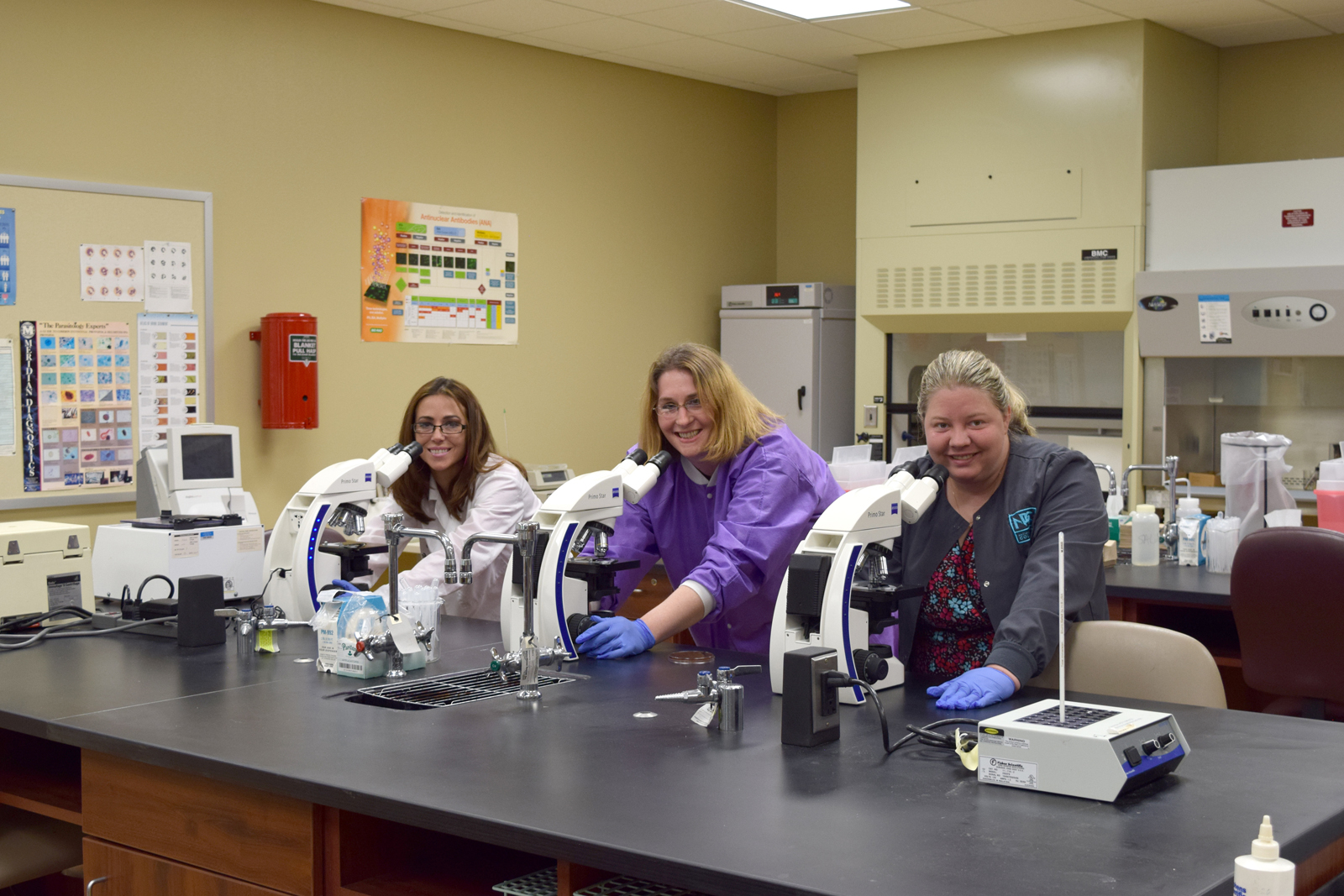
This handbook is intended to serve as a guide to students in the MLT-AD Program at
National Park College. It is not an all-inclusive document containing everything you
need to know or duplicating information contained in other NPC printed materials.
Therefore, students should be advised that the following contain additional information
that may be of interest:
NPC Policy Manual
NPC Catalog
NPC Student Handbook/Calendar
NPC Statement of Student Rights and Responsibilities
After becoming familiar with the contents of this handbook, students will be required
to sign the “Student Awareness Statement” at the end of the handbook and other statements,
waivers or checklists as appropriate. Students are encouraged to refer to the handbook
on an ongoing basis throughout their program of study.
The College and the Program reserve the right to change any policy at any time as
circumstances require or as dictated by clinical affiliates or outside accrediting
agencies. However, any such changes will be well reasoned, clear and published for
general distribution and feedback before they are implemented.
The style of this handbook is a blend of the formal and informal in a narrative. Your
comments and suggestions are welcomed.
Welcome to the Medical Laboratory Technology Program at National Park College! The
faculty and staff wish you success in the pursuit of your educational goals. We are
glad to have you and will do all that we can to assist you on the journey that you
have chosen. We hope that you have found your "calling" in life in the field of laboratory
medicine and that you understand that you have chosen a career of service to others.
We, the MLT Faculty, will strive to educate, train, and graduate ethical, competent,
and knowledgeable laboratorians through instruction in both the classroom and clinical
activities.
NPC is accredited by The Higher Learning Commission, a commission of The North Central
Association of Colleges and Schools. The Medical Laboratory Technology Program is
accredited by the National Accrediting Agency for Clinical Laboratory Sciences, (NAACLS,
http://www.naacls.org), 5600 N. River Rd., Suite 720, Rosemont, Illinois 60018-5119; 773-714-8880. Accreditation by NAACLS assures students that they will be provided with a quality
education in laboratory medicine. Upon successful completion of the program the graduate
is awarded an Associate of Applied Science Degree in Medical Laboratory Technology
and is eligible to sit for national certification exams. Graduation from the program
is not contingent upon passing an external certification exam.
The NPC MLT Student Handbook has been compiled by the faculty to provide information
specific to students enrolled in the Medical Laboratory Technology Program. This handbook
covers policies pertaining to both classroom and clinical phases of the program. The
MLT Student Handbook is designed to be used in conjunction with the College's Student
Handbook. The general Student Handbook is available online.
The mission of the Health Sciences Division is to provide students with didactic education
and practical experiences necessary to create a solid foundation for graduates to
qualify as contributing members of their chosen profession.
The Health Sciences Division supports the College in stating that admission is "open
to all applicants who are qualified according to its admission requirements, including
the payment of established fees. Under no circumstances shall an applicant be denied
admission because of race, sex, religion, national origin, or disability."
"Medical laboratory science professionals, often called medical laboratorians, are
vital healthcare detectives, uncovering and providing laboratory information from
laboratory analyses that assist physicians in patient diagnosis and treatment, as
well as in disease monitoring or prevention (maintenance of health). We use sophisticated
biomedical instrumentation and technology, computers, and methods requiring manual
dexterity to perform laboratory testing on blood and body fluids. Laboratory testing
encompasses such disciplines as clinical chemistry, hematology, immunology, immunohematology,
microbiology, and molecular biology. Medical laboratory science professionals generate
accurate laboratory data that are needed to aid in detecting cancer, heart attacks,
diabetes, infectious mononucleosis, and identification of bacteria or viruses that
cause infections, as well as in detecting drugs of abuse. In addition, we monitor
testing quality and consult with other members of the healthcare team. The medical
laboratory science profession has more than one career track based on level of education:
medical laboratory technician (2 years) and medical laboratory scientist (4 to 5 years).
Medical laboratory technicians are competent in the collection, processing and analysis
of biological specimens, the performance of lab procedures, the maintenance of instruments,
and relating lab findings to common diseases/conditions. Medical laboratory scientists
have a more extensive theoretical knowledge base. Therefore they not only perform
laboratory procedures including very sophisticated analyses, but also evaluate/interpret
the results, integrate data, problem solve, consult, conduct research and develop
new test methods." (quote from ASCLS (American Society for Clinical Laboratory Science)
Medical laboratorians are required to work both independently and collaboratively
with other health care workers such as physicians, nurses, and patients to provide
quality patient care. Communication skills, the capacity for calm, reasoned judgment,
and the ability to multi-task and problem solve are invaluable characteristics. Professionalism,
ability to maintain confidentiality, and ethical and moral behavior are essential
elements of a successful laboratorian. The work of an medical laboratory technologist/technician
is demanding, exacting, and challenging and not for the weak of heart!
Students are strongly encouraged to become active members of their national professional
organization, the American Society for Clinical Laboratory Science (ASCLS) and the
American Society of Clinical Pathology (ASCP). It is only through your participation
in these organizations that your voice is heard. See the Program Director for details
or go to the respective web sites at www.ascp.org, and www.ascls.org
Preamble
The Code of Ethics of the American Society for Clinical Laboratory Science sets forth
the principles and standards by which Medical Laboratory Professionals and students
admitted to professional education programs practice their profession.
I. Duty to the Patient
Medical Laboratory Professionals’ primary duty is to the patient, placing the welfare
of the patient above their own needs and desires and ensuring that each patient receives
the highest quality of care according to current standards of practice. High quality
laboratory services are safe, effective, efficient, timely, equitable, and patient-centered.
Medical Laboratory Professionals work with all patients and all patient samples without
regard to disease state, ethnicity, race, religion, or sexual orientation. Medical
Laboratory Professionals prevent and avoid conflicts of interest that undermine the
best interests of patients.
Medical Laboratory Professionals are accountable for the quality and integrity of
the laboratory services they provide. This obligation includes maintaining the highest
level of individual competence, as patient needs change, yet practicing within the
limits of their level of practice. Medical Laboratory Professionals exercise sound
judgment in all aspects of laboratory services they provide. Furthermore, Medical
Laboratory Professionals safeguard patients from others’ incompetent or illegal practice
through identification and appropriate reporting of instances where the integrity
and high quality of laboratory services have been breached.
Medical Laboratory Professionals maintain strict confidentiality of patient information
and test results. They safeguard the dignity and privacy of patients and provide accurate
information to patients and other health care professionals. Medical Laboratory Professionals
respect patients’ rights to make decisions regarding their own medical care.
II. Duty to Colleagues and the Profession
Medical Laboratory Professionals uphold the dignity and respect of the profession
and maintain a reputation of honesty, integrity, competence, and reliability. Medical
Laboratory Professionals contribute to the advancement of the profession by improving
and disseminating the body of knowledge, adopting scientific advances that benefit
the patient, maintaining high standards of practice and education, and seeking fair
socioeconomic working conditions for members of the profession.
Medical Laboratory Professionals accept the responsibility to establish the qualifications
for entry to the profession, to implement those qualifications through participation
in licensing and certification programs, to uphold those qualifications in hiring
practices, and to recruit and educate students in accredited programs to achieve those
qualifications.
Medical Laboratory Professionals establish cooperative, honest, and respectful working
relationships within the clinical laboratory and with all members of the healthcare
team with the primary objective of ensuring a high standard of care for the patients
they serve.
III. Duty to Society
As practitioners of an autonomous profession, Medical Laboratory Professionals have
the responsibility to contribute from their sphere of professional competence to the
general well-being of society. Medical Laboratory Professionals serve as patient advocates.
They apply their expertise to improve patient healthcare outcomes by eliminating barriers
to access to laboratory services and promoting equitable distribution of healthcare
resources.
Medical Laboratory Professionals comply with relevant laws and regulations pertaining
to the practice of Clinical Laboratory Science and actively seek, to change those
laws and regulations that do not meet the high standards of care and practice.
As a Medical Laboratory Professional, I pledge to uphold my duty to Patients, the
Profession and Society by:
Placing patients’ welfare above my own needs and desires.
Ensuring that each patient receives care that is safe, effective, efficient, timely,
equitable and patient-centered.
Maintaining the dignity and respect for my profession.
Promoting the advancement of my profession.
Ensuring collegial relationships within the clinical laboratory and with other patient
care providers.
Improving access to laboratory services.
Promoting equitable distribution of healthcare resources.
Complying with laws and regulations and protecting patients from others’ incompetent
or illegal practice
Changing conditions where necessary to advance the best interests of patients
Applicants to the MLT Program must have successfully completed all prerequisite courses
or be in the last semester of completing all prerequisites when application is made
to the Program. All courses required for the MLT Program must be completed with a
"C" or better for continuation in or completion of the Program. Applications for consideration
will be accepted from January 15th to April 15th. Admission decisions will be made
by May 15th.
Because this is a specialized program, all courses required for the Associate Degree
in Medical Laboratory Technology are accepted in transfer at selected institutions.
Consult your advisor regarding the articulation agreement between NPC and other institutions
for further information.
Required Courses (suggested sequence)
Fall Semester (17 ssch)
Course Code
Course Number
Course Name
Credit Hours
CIS
1023
Introduction to Computing
3
ENG
1113
English Composition I
3
BIOL
2224
Anatomy & Physiology I
4
CHEM
1104
Chemistry for non-majors
4
MATH
1123
College Algebra
3
Spring Semester (16 ssch)
Course Code
Course Number
Course Name
Credit Hours
BIOL
2234
Anatomy & Physiology II
4
ENG
1123
English Composition II
3
BIOL
2244
Microbiology
4
PSYC
1103
General Psychology
3
MLT
2002
Intro to MLT
2
Summer Semester (6 ssch)
Course Code
Course Number
Course Name
Credit Hours
MLT
1022
Serology & Immunology
2
MLT
1124
Hematology
4
Fall Semester (15 ssch)
Course Code
Course Number
Course Name
Credit Hours
MLT
2015
Pathogenic Microbiology
5
MLT
2024
Immunohematology
4
MLT
2032
Clinical Microscopy
2
MLT
2034
Clinical Chemistry
4
Spring Semester (15 ssch)
Course Code
Course Number
Course Name
Credit Hours
MLT
2114
Clinical Application Microbiology
4
MLT
2123
Clinical Application Immunohematology
3
MLT
2134
Clinical Application Chemistry
4
MLT
2154
Clinical Application Hematology
4
Philosophy
Medical laboratory technology is applied science, specifically the sciences of mathematics,
biology and chemistry employed in the detection, diagnosis and treatment of disease.
A strong background in science is supplemented with communication and interpersonal
skills, ethics and decision making, and professional growth in a structured series
of courses. The program of study applies the concept of mastery learning as outlined
by John B. Carroll (1970):
It is a known fact that students, who are confident and well-motivated, provided with
good basic intelligence and aptitude, and provided with good instruction, can learn
a fantastic amount in relatively short periods of time. It is also a known fact that
once they learn something well, it tends to be retained, particularly if it is periodically
reviewed and tested. It is also known; however, that pupils vary a great deal in the
rate at which they learn – some learn very fast, others much slower, but, despite
these differences in rate of learning, nearly all pupils can learn what they are supposed
to learn…given enough time.
Mission
The MLT Program is dedicated to providing quality education and training appropriate
to provide students with entry-level competencies in all areas of the clinical laboratory.
The MLT Program is committed to providing ethical, competent, and capable medical
laboratory technicians to serve the needs of the medical community. The MLT Program
strives to inspire students to be life-long learners.
Vision
The MLT Program supports the vision of the College as stated in the catalog: “To be
the preferred choice for education, serving as a catalyst for personal enrichment,
economic growth and community engagement. “
Program Goals
Students with a background in science and math who seek a service-orientated healthcare
profession will be recruited in the program.
The program will offer an up-to-date curriculum that prepares students to enter the
profession.
The faculty will stay current in their professional discipline and facilitate student
learning.
The community of interest (clinical laboratory science facilities and practitioners)
will provide input to the program, serve as clinical resources, and hire graduates
who demonstrate appropriate knowledge and skills.
Upon successful completion of the Program the student will be awarded an Associate
of Applied Science Degree in Medical Laboratory Technology by NPC and will be eligible
to sit for a national certifying exam.
At entry-level, the medical laboratory technician will possess the entry-level competencies
necessary to perform routine medical laboratory tests in areas such as Clinical Chemistry,
Hematology/Hemostasis, Immunology, Immunohematology/Transfusion medicine, Microbiology,
Urine and Body Fluid Analysis, and Laboratory Operations.
The level of analysis ranges from waived and point of care testing to complex testing
encompassing all major areas of the clinical laboratory. The medical laboratory technician
will have diverse functions in areas of pre-analytical, analytical, post-analytical
processes. The medical laboratory technician will have responsibilities for information
processing, training, and quality control monitoring wherever clinical laboratory
testing is performed.
At career entry-level, the medical laboratory technician will have the following professional
competencies.
They will have the ability to:
Professional Behaviors and Communication
Demonstrate professional and ethical behavior along with effective interpersonal communication
skills when engaging with various stakeholders.
Establish effective interprofessional working relationships with other health care
professionals, demonstrating comprehension of and respect for their roles and patient
welfare.
Recognize and appreciate the importance of engaging with an inclusive workforce through
collaboration.
Value and advocate for a workplace environment that fosters inclusivity, diversity,
equity, and accessibility.
Safety and Compliance
Comply with government regulations and accreditation standards relevant to the respective
discipline.
Adhere to prescribed protocols for overall laboratory safety, biohazard containment,
and waste disposal.
Implement quality assurance principles to ensure the validity and accuracy of laboratory-generated
data.
Education and Research
Acknowledge and respond to individual requirements for continuing education and development
to foster growth and maintain professional competence.
Provide instruction to users of laboratory services regarding appropriate procedures,
test utilization and interpretation.
Laboratory Operations and Management
Employ a logical and systematic problem-solving approach when identifying errors and/or
technical issues with laboratory procedures and instrumentation.
Apply principles of data security to safeguard laboratory and hospital information
systems.
Apply principles of quality assurance to ensure validity and accuracy of laboratory
data.
E. Pre-Analytical Competencies
Evaluate specimen collection, processing, and storage procedures in accordance with
standard operating procedures.
Ensure specimen integrity is maintained throughout the sample procurement process.
F. Analytical Competencies
Adhere to written policies, processes, and procedures for analytical testing, analysis,
and instrumentation maintenance.
Evaluate and provide rationale for troubleshooting protocols in analytical testing
when appropriate.
Perform routine procedures in accordance with standard operating procedures.
Apply quality control principles to analytical testing procedures, including instrument
calibration, statistical analyses of control results, Westgard rules, and verification
of reference ranges.
Perform basic calculations, dilutions, and statistical analyses for procedures and
analytical testing in the respective discipline.
Apply theoretical principles of instrumentation to current methods of analysis.
Post-Analytical Competencies
Perform all post-analytical procedures in accordance with quality assurance protocols
and regulatory standards.
Evaluate results for accuracy relative to quality control, patient history, specimen
integrity, and overall clinical correlation.
Report test results, including abnormal, STAT, and critical values, in accordance
with the laboratory’s standard operating procedures.
*Competencies are assessed by clinical faculty using clinical competency check lists
for each laboratory section /discipline. Students are required to demonstrate at least
70% competency, as observed and judged by clinical faculty, on a variety of criteria
reflecting the aforementioned entry-level competencies. (NAACLS Standards, October
2024)
Program Outcomes Assessment
The MLT Program will use several measurable outcomes to assess the overall effectiveness
of our program. Following are outcomes criteria we strive to meet in this program.
overall favorable results from the “Employer Survey” (75% favorable responses)
overall favorable results from MLT course evaluations (75% favorable responses)
Graduation rate of 75% or better from students entering the second half of the program.
BOC pass rate of at least 75% within one year of graduation.
Job placement of at least 75% within six months of graduation for active job seekers
(info taken from six month “Graduate Survey”)
A student who applies to the MLT Program must meet NPC general admission requirements
and shall:
Provide the following credentials to the MLT Program Director, Division of Health
Sciences, 101 College Drive, Hot Springs, AR 71913-9174:
official high school transcript(s) or GED scores
official transcript(s) from any college, university or other post-secondary schools
previously attended
completed Health Sciences application form
placement test scores – ASSET, COMPASS (available through Student Services), ACT or
SAT
Meet all of the following requirements:
be a high school graduate, anticipate high school graduation or where applicable pass
the General Education Development Test (GED)
attend a general information meeting or interview with the Program Director
have at least a 2.5 cumulative GPA at the time of application
provide necessary health records (vaccinations) to the school nurse
be and remain free of substance abuse that would cause behavioral changes and related
problems
have successfully completed (grade of “C” or better) all prerequisites required for
the MLT Program or be in the last semester of completing prerequisites when application
is made to the Program
submit to a drug screen, background check, TB skin test, and required immunizations
prior to placement in the clinical phase (students must have clear drug screens and
background checks to participate in placement in clinical facilities) (See Substance
Abuse/Drug Screen Policy; NPC Criminal Background/Drug Screen Process, included in
MLT Student Handbook)
be able to perform non-academic Essential Functions (included in MLT Student Handbook)
Applications are accepted from January 15th through April 15th. Admission decisions
will be made by May 15th. A maximum of twelve (12) students will be accepted into
the program. This gives a student to instructor ratio of 12:1 in the classroom and
6:1 in the student laboratory.
Admission criteria used:
overall GPA
GPA in science courses
prior clinical experience
interview
references/recommendations
performance in Intro. to MLT
prerequisite status
Students admitted and enrolled in the NPC (MLT) Program have two years to complete
the program once accepted.
Failure to complete the program within two years would require readmission into the
program, along with all didactic and clinical courses retaken.
Should there be a delay in a student beginning their clinical rotations, the student
must first reapply for the program. The student would have to achieve competencies
in both the didactic and psychomotor components of the MLT program. This process will
require comprehensive exams for all MLT courses and satisfactory lab skills in all
areas of the lab. A 70% score will be required for the comprehensive lecture and lab
component before going to clinical rotations.
All MLT classes have to be taken in sequence of the course schedule.
Credit and advanced placement are available. Questions about such or about course
substitutions should be taken to the Program Director or the Registrar.
Questions about financial assistance can be taken to the Vice-President for Student
Services and the Financial Aid Office. The College strives to help all students achieve
their educational goals through the awarding of loans, scholarships, and work-study
funds. Information can be found on the NPC web site or by calling the financial aid
office at 501-760-4237. For information concerning scholarships contact Amy Watson
at 501-760-4217. Foreign students must check with Student Services. Various student
support services are available.
As a student your continued health and safety are primary concerns. This section details
things you will be expected to do that will help assure these goals. Interactions
with patients in the health care system carry inherent risks to both the patient and
the caregiver, including, but not limited to communicable diseases. In the curriculum
and student laboratory, students will be given information regarding known risks for
various diseases and measures to decrease these risks. Students are taught and expected
to exercise standard precautions and appropriate barrier protection in the laboratory
and in the care of all patients.
Health & Liability Insurance: All Health Science students who participate in clinical
rotations are required to purchase and provide proof of personal health insurance.
The College does provide medical liability insurance for all Health Science students
required to participate in a clinical experience. The fee for this is collected from
the student as part of the cost of the course.
Immunizations: All Health Science clinical students are required to provide proof
of:
Hepatitis B
Varicella Zoster
Influenza
DPT
MMR
TB
Injury/Accident/Exposure: In the event of an injury, accident, or exposure in the
MLT classroom or student lab, the student should immediately notify the MLT Program
Director or MLT faculty for the purpose of determining the need for follow-up, to
detect risk of blood borne infection and to minimize chances of future accidents.
First aid kits and other safety supplies are available for your use. The Program Director/Faculty
will determine the next course of action. The event will be documented on a form available
from the campus nurse or from the VP for Student Affairs. The campus nurse will assess
the situation, complete the form, and take appropriate action. The campus nurse is
on campus from 8:00 to 4:30 p.m. in the Student Center, 501-760-4209, during all sessions. Aid may also be obtained from the Student Support Services
Office in the Commons, 501-760-4232. In the case of an emergency, contact the switchboard or the campus nurse. Switchboard
phone number is 501-760-4222. Campus nurse phone number is 501-760-4209. If the injury/illness is life-threatening a call should be placed to the switchboard
who will notify the campus nurse. The campus nurse will assess the situation and call
911 as appropriate. If the nurse is off campus the office of the Vice President for
Student Affairs should be notified. LifeNet EMS is located approximately 5-8 minutes
from the campus. If the event occurs in the clinical facility, the clinical coordinator
will be immediately informed by the student and will institute the facility’s procedure,
documenting appropriately. Any treatment will be at the student’s expense. Deliberate,
uncorrected, unsafe actions leading to accidents and failure to report accidents will
both be considered cause for dismissal. See “Causes for Dismissal” included in this
handbook.
Emergency Care: In the event of life-threatening illness/injury a call shall be placed
to 911. EMS services are located within 5-8 minutes from the campus. Clinical facilities
provide emergency medical treatment consistent with the policies of the hospital to
all clinical students. All treatment will be at the student’s expense.
If you have any disabling or limiting condition or disease, make this fact known to
your faculty advisor and instructors as soon as possible. Counseling and necessary
assistance will be made available to help. Information you provide will be kept confidential
within the provisions of the Privacy Rights Act.
National Park College has procedures in place to help ensure the safety of students
during an emergency. The NPC campus has an “all-call” system in which the President
or designee makes an announcement over the intercom system to each building. Each
building on campus has one or more building “captains” who are responsible for the
building in case of emergency evacuation or lock-down. The captains are responsible
for securing or evacuating the building. Emergency instructions/inclement weather
information, etc., can also be sent to all students and faculty via cell or home phone
by call or text.
General Emergency – dial “0” from any campus phone to reach the switchboard, 501-760-4222 from any other phone. Campus security can be reached on campus phones at 4293, 501-760-4293 from any other phone.
For life-threatening illness/injury call 911 as described in “Emergency Care” above.
Fire – any person can sound a fire alarm; evacuation routes are posted in the hallway
outside the MLT classroom. Students will be oriented as to location of fire alarms
and extinguishers.
Purpose
The intent of the Drug Screen is to ensure a healthy and safe environment for students,
faculty, and those who come in contact with students during scheduled learning experiences.
It is also a requirement of many of the clinical affiliates. The MLT Program strictly
prohibits the illicit use, possession, sale, conveyance, distribution and manufacture
of illegal drugs, intoxicants, or controlled substances in any amount or in any manner
and the abuse of non-prescription and prescription drugs. Further information can
be found in the NPC catalog, “Student Rights & Responsibilities.” As a condition of
enrollment students will read NPC Division of Health Sciences Substance Abuse Policy
and sign a Substance Abuse Policy Release Form.
Incomplete Drug Screen/Results
Any student who does not complete the drug screening procedure during the prescribed
time can be dropped from the Program. It is the student’s responsibility to communicate
difficulties to the MLT Program Director.
Refusal of Drug Screening: Refusal to submit to a drug screening in any category (pre-clinical,
random, or for cause) is grounds for immediate dismissal.
Readmission
Any student dismissed from the Program because of a positive drug screen may reapply
after one year provided, they provide documentation of a successful treatment program
with periodic screening tests.
A second termination for alcohol/drug related behavior will result in a 3-year dismissal
from the Program and, upon application for readmission, must provide documentation
of successful treatment and test negative for drugs of abuse at the time of application.
Procedure for Testing for Cause: (refer to NPC Division of Health Sciences Substance Abuse Policy)
Confidentiality
All testing information, interviews, reports, statements, and test result specifically
related to the individual are confidential. All drug test results will be sent from
the lab to the Nursing/Health Science Dean for review.
Policy
Students/Faculty must have clear criminal background checks and drug screens to participate
in placement in clinical facilities. All participating schools and agencies agree
to adhere to a standardized process for clinical instructor/student screening.
The criminal background check is not a requirement for admission to a Health Science
program; however, the process will be completed after an invitation for admission
is received and before a clinical rotation. Pending results of the criminal background
check and drug screen, the student will be conditionally accepted into one of the
Health Science/Nursing Programs.
Upon admission, the student will complete the criminal background form and sign the
NPC Criminal Background release form. The student must bear the cost of the prescreening
requirements, and the process will require the use of an online vendor. Students will
sign a waiver and release of liability wherein the student specifically agrees to
allow NPC to share the results of the background check with the clinical sites to
which students will be assigned. The student shall further agree that they understand
that such information may be used to deny the student from participating in clinical
rotations.
Criminal background checks will be conducted by Verified Credentials (private vendor)
and will include: County Criminal Record Search, National Criminal Database, Social
Security Number Trace/Residential History, Office of Inspector G (OIG), General Services
Administration (GSA), Excluded Parties List System (EPLS), Office of Foreign Assets
Control (OFAC) and Nationwide Sex Offender. Criminal background checks should review
a person’s criminal history for seven (7) years back from the date of application
to the Program. Background checks will be obtained from a consumer reporting agency
and will comply with Federal Trade Commission guidelines regarding the Fair Credit
Reporting Act. Please be advised that upon graduation, employers and licensing bodies
such as the Arkansas State Board of Nursing will require state and federal background
checks that allows for more rigorous review of legal documents which may impact licensure
and/or employment.
If the criminal background check returns with anything other than minor misdemeanors,
the Criminal Background Review Committee (CBRC) will be notified. CBRC is made up
of NPC faculty and hospital agencies’ members. Please be advised that clinical instructor/students
will be unable to attend clinical facilities for appropriate reasons, including but
not limited to the following convictions:
Murder
Felony assault
Sexual offenses/sexual assault/ Registered sex offenders
Abuse
Felony possession and furnishing (without certificate of rehabilitation)
Other felonies involving weapons and/or violent crimes
Class B and Class A misdemeanor theft
Felony theft
Fraud
Misdemeanor convictions/deferred adjudication or felony convictions/deferred adjudications
involving crimes against persons (physical or sexual abuse)
Misdemeanor convictions/deferred adjudications related to moral turpitude (prostitution,
public lewdness/exposure, etc.)
Felony convictions/deferred adjudications for the sale, possession, distribution,
or transfer of narcotics or controlled substances
If the student’s record is not clear and the CBR committee denies access to clinical
facilities, then the potential student will be denied admission. If the clinical instructor’s
record is not clear, the contract for employment will be null and void. The College
will not locate or provide alternative sites for clinical rotations for students ineligible
to attend clinical rotations at specified sites. The student has the right to appeal.
This appeal would allow students to obtain documentation that would demonstrate that
their record is corrected and clear. Students must notify the Division of Health Sciences/MLT
Program within 72 hours of their intent to appeal. All appeals must be held in a timely
manner to expedite the admissions process. If this is not possible, students may be
considered for admissions in a future class. In the event that a student feels that
an error has been made in the reporting of the criminal background check and/or drug
screen, it is the student’s responsibility to contact the physician and/or external
vendor for a verification of the drug screen or background check at the student’s
own expense.
The initial background check satisfies this requirement during continuous matriculation
thru the program. If the student is separated from the program for more than two years,
a new background check will be required. Division Chairs of Nursing and Health Sciences
reserve the right to require the criminal background check in a lesser time, depending
on the reason for separation.
The NPC Programs will advise the clinical site of the name of the clinical instructor
and a list of students assigned to their facility a minimum of 14-21 days in advance
of their arrival if requested.
888A letter signed by the Dean and Program Director or designee will certify that
criminal background checks, drug screens, HIPPA training, and Health Data Forms with
documentation of TB skin testing or chest x-ray or T-spot result and immunization
status will be sent to clinical facilities upon request.
888Enrolled students are required to disclose misdemeanor or felony convictions, other
than minor traffic violations, within five business days of occurrence to the appropriate
Division Chair/Program Director. Non-disclosure or falsification may be grounds for
dismissal or degree revocation.
Record keeping for the criminal background information will be confidential. Access
to these files will be available only to committee members, Division Chair and Program
Directors. Records can be retrieved by students and/or program designee from the password
protected database at any time during student tenure at National Park College. Once
you leave a Health Science program your personal records stored on Verified Credentials
will not be accessed by NPC Division of Health Science personnel.
The Occupational Safety and Health Administration (OSHA) of the U.S. Department of
Labor and the Center for Disease Control and Prevention (CDC) have developed and enforce
guidelines to help prevent blood and body fluid borne infections. The guidelines are
known as Standard Precautions. They include the following:
Avoid contaminating the outside of specimen containers. Lids should be tight. Enclose
specimens in a second container such as a sealed bag (double bagging) when transferring
between labs.
Wear gloves when processing specimens. Dispose of, rather than disinfect, gloves after
use.
No mouth pipetting. No eating, drinking or smoking in the lab. Additionally, the application
of makeup or putting in or taking out of contact lenses is discouraged.
No bending, breaking, recapping or removing used needles from disposable syringes.
Place in puncture-resistant containers.
Use masks and eye wear if splashing or aerosolization is anticipated. Minimize aerosol
formation in centrifuges by capping all tubes.
Use biological safety cabinets for vigorous mixing.
Decontaminate work surfaces with a chemical germicide after spills and when work is
completed. A fresh 1:10 dilution of household bleach is usually effective.
Dispose of contaminated materials in biohazard bags and in accordance with institutional
policies for disposal of infective waste. This includes autoclaving before removal
from the lab prep area.
Decontaminate equipment before servicing, repair or shipping.
Wash hands and remove protective clothing before leaving the laboratory.
According to OSHA document 3130 (1992), contamination with blood means “human blood,
blood products, or blood components. Other potentially infectious materials include
human body fluids such as saliva, semen, vaginal secretions, cerebrospinal, synovial,
pleural, pericardial, peritoneal, and amniotic fluids; any body fluids visibly contaminated
with blood; and all body fluids in situations where it is difficult or impossible
to differentiate between body fluids.”
The Division of Health Sciences recognizes legal and ethical obligations to individuals
with Human Immunodeficiency Virus (HIV) and does not discriminate based on HIV status
or on the perception that an individual is at risk of infection. In the case of possible
exposure, The HIV Shield Law, Act 289 of 1991, provides for testing, counseling and
confidentiality of results.
As Facebook, Instagram and Twitter gain popularity in terms of Advanced Technology,
so does the need to implement policies with regard to HIPAA, Workplace/MLT Program
Relations, as well as both Hospital and peer images and/or reputation. Therefore,
it is the policy of the MLT Program at National Park College to prohibit any and all
participants in the MLT Program from posting negative communication, inappropriate
behavior (with regard to Affective Objectives), or threats and/or harassments on any
of the social networking sites. Although these sites are personal accounts/pages they
can/may be treated as HIPAA violations. This policy is being implemented as the result
of students posing subjective and/or negative comments and opinions regarding affiliated
clinical sites, laboratory directors, clinical instructors, peers and or hospital
employees.
Since your clinical rotation is an extension of the College’s relations with area
hospitals, it is expected that you will treat these clinical sites (affiliated hospitals)
as your workplace. Further, the classroom and labs of the MLT Program exist in part
to train you to be professionals in the medical field. There, negative and/or subjective
comments or postings to social media or networking sites are grounds for dismissal
from the Medical Laboratory Technology Program here at NPC.
It is the responsibility of the student to:
Notify the Program of any change in name, address or phone number
Provide official high school and/or college and other post-secondary transcripts
Notify the Program officials of any change in health status affecting continuance
in the Program
Maintain academic standing of 2.5 GPA or better
Abide by the policy on Student Rights and Responsibilities and maintain a high ethical
standard
Be prepared for, attend all class sessions and keep up with course work
Keep and review this Handbook and course syllabi
Understand grading and evaluation procedures
Participate in evaluation of instruction
File degree plans, apply for graduation with Student Services and pay all related
costs
In accordance with the NPC Policy Manual, 6.600, “Students are expected to meet all
attendance requirements and engage in coursework as outlined in the course syllabus.
Failure to maintain satisfactory course participation is the equivalent of excessive
absenteeism and may result in the student being dropped. To maintain good-standing
in online courses, students are expected to submit assigned coursework in a timely
manner per instructor requirements.”
Students are expected to always come to class and clinical prepared. Punctuality in
all classes, labs, and clinical is expected. Routine medical or dental appointments
should be scheduled outside of course time. Students are responsible for finding out
what assignments and material they missed. Missed labs cannot be made up. Excessive
absences can result in dismissal from the program. Students are directed to individual
course syllabi concerning absences and tardiness.
Attendance During Clinical Applications
MLT students are encouraged to think of their semester in the clinical affiliates
as an almost employee-employer relationship. In keeping with this concept, students
are allowed to miss up to three days out of the 16 weeks of their rotations for reasons
of sickness or personal business. Upon occasion of the third absence the student will
be counseled, an “Excessive Clinical Absences” form will be filled out and signed
both by the Program Director and the student. A fourth absence can result in the student
being dismissed from the Program. Abuse of this policy, such as habitual tardiness
or unexplained absences from the department, will result in poor evaluations and possible
disciplinary sanctions. The effect on your grade is detailed in this handbook.
If you must be absent, or late by more than 30 minutes, notify your supervisor or
have some other responsible persons do so by telephone. Please be sure that such messages
reach the individuals under whom you usually work so that they can plan your rotation
effectively. Clinical time is determined in part by workload and your comprehension
level.
Inclement weather may cause the College to close; such announcements are made over
local radio stations between 6:00am and 6:30am. For clinical rotations you may need
to make travel plans before 6:00am. Your options are: 1) because of road conditions
you do not go to your assigned rotation and the College is closed = no penalty; 2)
as in 1 but the College is open or opens late = an absence; 3) you arrive late = a
tardy; 4) you make it to your assigned rotation on time but the College is closed
= an extra day off (if you elect to stay) or no penalty (if you elect to leave); or
5) you stay part of a day = credit for the hours in rotation.
You should provide yourself with the following expendable supplies for use in various
classes:
One or more full length, long-sleeve lab or scrub jacket/coat for the Intro. to MLT,
scrubs for all other MLT courses as described below under “Dress Code”
Cotton balls
shoulder patches for scrub jacket and scrub tops (patches available in the NPC Bookstore,
required for clinical experiences
Band-aide
Felt-tip pens, permanent
Gloves, latex or synthetic (Be aware that disposable gloves come in five sizes, powered
or non-powdered and hypoallergenic. Pick the type that is right for you. Some long-term
glove wearers find that glove liners are helpful.)
The usual pens, pencils and notebooks for any class
While safety goggles will be available as needed, you have the option of buying your
own pair through the Bookstore
A watch with a display in seconds is recommended
The following dress code is required for lecture, laboratory, and clinical. During
the clinical phase of the program students must also abide by any policies of the
facility.
Clothing: designated scrubs are to be worn during MLT didactic & clinical courses.
Insignia/Patch: an “MLT Program” patch is to be worn on the left sleeve of the scrub jacket and
scrub top at the shoulder.
Shoes: sport, athletic, or clinical shoes must be worn. Canvas, sandals or open-toed shoes
are not acceptable for safety reasons. Shoes and laces must be clean and worn with
appropriate hosiery or socks. Non-mesh, solid uppers are required.
Hygiene: students are to be clean, neat and well-groomed at all times; students should bathe
daily; use of perfume, cologne or aftershave is discouraged; makeup should be conservative.
Fingernails: should be short, clean and well-manicured. As some clinical institutions prohibit
the wearing of acrylic nails, this practice is strongly discouraged. Nail polish should
be conservative in color and not chipped.
Hair: for both men and women must be clean, neat, and conservative in style and color,
well-controlled and off the shoulders. Long hair should be pulled back. No head gear
is permitted.
Beards: male students must either shave regularly or if they choose to wear a beard or mustache
and/or beard, must keep them clean and well-groomed.
Body piercings/Tattoos: piercings are not permitted other than a single piercing in each ear; tattoos will
be covered at all times in the clinical setting.
Jewelry: should be conservative; no dangling necklaces or earrings that extend more than
½ inch below the earlobe are acceptable.
Identification: during clinical assignments students must wear their NPC ID clinical badge (shows
first name only); badges should be visible at all times, displayed on the lab coat
lapel or on a lanyard around the neck as long as it does not create a safety hazard.
Students are advised against full-time employment while enrolled in the MLT Program.
If employment is necessary, students must determine how many hours they can work and
still maintain their obligations to the MLT Program. Employment in a medical setting
may actually benefit the student educationally as long as the hours are not excessive.
No special consideration will be afforded students with regard to their employment.
Medical Laboratory Technology students are not expected to perform service work and
are not allowed to take the place of qualified staff during any clinical rotation.
After demonstrating proficiency, students, with qualified supervision, may be permitted
to perform procedures. A clinical institution which employs a currently-enrolled MLT
student as a laboratory assistant or phlebotomist will schedule the student for work
during non-instructional hours. The student is not to be “pulled” from their instruction
to perform the duties they normally perform as an employee, even temporarily. The
student is to report such practice to the MLT Program faculty. A student who also
works as an employee may not count their paid hours as clinical time as the students
is performing the duties of an employee, not a student in training.
When a student is employed by any health care provider, the student is in no way to
represent NPC; the scrub jacket and patch are to be worn only when attending classes
or clinical experiences. Your actions as a student/employee are, however, a reflection
on the College and the Program. Recall the medical motto, “First, do no harm.”
Students are citizens of the city, state and nation and of the academic community.
They are; therefore, expected to conduct themselves as law-abiding members of each
community at all times. Violation of laws or ordinances that also adversely affects
the pursuit of educational objectives may cause the College to enforce sanctions up
to and including dismissal, regardless of any proceedings by other authorities. Also,
violation of any College or classroom policies may subject a student to the same range
of sanctions whether or not the conduct violates local, state or national laws and
ordinances.
Misconduct subject to disciplinary sanction includes but in not limited to:
Generally, College discipline shall be limited to conduct which adversely affects
the College community’s pursuit of its educational objectives or which would
jeopardize the health and safety of the College community.
Expulsion, suspension or less severe sanction from the College may resultfrom any
of the following conduct where it occurs on campus or in the areas orsituations listed
in Section 17 or 18 of the NPC catalog.
Academic cheating or plagiarism
Student display of behavior that is deemed a safety risk to himself/herself or others
within the campus community
Furnishing false information to the College with intent to deceive
Forgery, alteration or misuse of College documents, records or identification cards
Assault and battery
Vandalism, malicious destruction, damage or misuse of public or private property,
including library materials
Theft, embezzlement or temporary removal of the property from its assigned position
Failure to meet obligations related to the College
Rioting, inciting to riot, raiding, and inciting to raid College property
Illegal manufacture, sale, possession or use of narcotics, barbiturates, central nervous
system stimulants, marijuana, sedatives, tranquilizers, hallucinogens, and/or other
similar known drugs and/or chemicals
Possession of firearms, ammunition, explosives, fireworks, dangerous weapons, incendiary
devices, or chemicals
Gambling
Two or more like offenses for which the penalty of disciplinary probation may be imposed
An additional offense committed while the student is on disciplinary probation
Possession or use of alcoholic beverages on College-owned or supervised property
Indecent or obscene conduct on College property or College-supervised property, including
cyberspace
Unauthorized solicitation in buildings or facilities owned or controlled by the institution
Abuse or misuse of computing resources to include any attempt to circumvent or compromise
the security of any NPC computing resource, any unauthorized access to or tampering
with any data files belonging to NPC or any other person or entity, any other similar
misuse of or damage to NPC computing resources, or the use of NPC computing resources
belonging to any other person or entity
B. College disciplinary probation or any lesser penalty may result from the following
conduct when it occurs on College-owned property, College-supervised property or in
the areas or situations listed in Section 16 and 17 of the NPC catalog.
Intoxication or disorderly conduct
Failure to comply with official and proper regulations or order of a duly designated
official acting within the scope of his/her authority, agency or agent
Academic and Classroom Misconduct
Your instructor has the primary responsibility for control over classroom behavior
and maintenance of academic standards. Plagiarism, cheating and other forms of academic
dishonesty are prohibited. Students guilty of academic misconduct, either directly
or indirectly by participation or assistance, are immediately responsible to the instructor
of the class. A grade of “F” or zero will be assigned for the exercise or examination
in question. Misconduct in a clinical setting where there is potential harm to patients
or the public is especially serious. Academic and classroom/clinical misconduct can
result in sanctions including dismissal from the program. See “Discipline/Due Process
Policy” in this handbook.
Sanctions
Upon a determination that misconduct has occurred, the following sanctions may be
imposed, either singly or in combination, by the appropriate College officials:
Restitution or reimbursement of property losses
Warning
Written reprimand
Restriction of privileges for a period of time
Probation for a period of time with any limitations on actions or status stated
Suspension for a period of time with conditions of readmission stated
Dismissal
If a student believes accusations of misconduct, including academic misconduct resulting
in a low grade, are erroneous, the student may appeal the case through the published
College procedures. Generally, the process entails meeting with your instructor first.
If the problem cannot be satisfactorily resolved there, then meet with the Division
Chair responsible for your area of study. The next step is to meet with the appropriate
Vice-President(s). An appeal hearing before the College Disciplinary Committee composed
of staff, faculty and students may be necessary. Finally, the President and Board
of Trustees, as appropriate, can help resolve the problem. Due process will be observed
throughout. Failure to follow the appeal procedure may result in your appeal being
jeopardized. See Sections 31 – 36 in the NPCC catalog & Student Handbook. Students
can also appeal academic/grade issues through the Academic Appeals Committee as outlined
in Policy # 9.300. Disciplinary procedures for students are Policy # 9.310. These
policies can be accessed on the NPC website under “Board Policy”.
In addition to tuition, registration fees and supplies you are also responsible for
the following expenses.
Document management by Verified Credentials - $25.80
Immunizations* - variable
Personal health insurance - variable
Textbooks - appx. $900-$1000
National registry exam fee - $225
*Verified Credentials will perform drug screens & background checks. Procurement of
required immunizations are the responsibility of the student with all results being
submitted to Verified Credentials by the student. Students with financial aid are
advised to check with their advisor in the event that any incurred program costs/fees
may be covered by their aid.
Immunizations required:
MMR or titer
Varicella zoster or titer
Hepatitis B or titer
Influenza vaccine TB skin test
DPT (Tdap)
The successful candidate for graduation will also be expected to pay graduation fees
and costs.
Lecture will be used most frequently in the classroom and supplemented with discussion,
demonstration, audiovisual aids, Student Oriented Learning Outlines (SOLOs), case
studies, outside reading and written assignments. Proficiency will be assessed by
class participation and written exams consisting of multiple choice, true or false,
fill-in, matching and essay questions.
In the teaching laboratory on campus, demonstration will be followed by drill and
practice. Computer Assisted Instruction (CAI) will be used as appropriate. Proficiency
will be assessed by direct observation, question and answer sessions and testing with
previously assayed materials (lab practicals).
Clinical laboratory experience is provided by area health care institutions. There
demonstration and observation will be followed by drill and practice until proficiency
is gained as determined by the supervisory personnel and Program faculty in a joint
process of clinical evaluation. The program director may supplement the experiences
at any time, aid in review and provide clinical correlations. A comprehensive final
exam may be administered at the end of the clinical experience.
The motivated, self-directed student may benefit from resources such as CAI, vocabulary-building
exercises and games.
The combination of rigorous academic preparation and clinical education makes the
MLT Curriculum unique. It is the consensus of educators in the field “to stress the
teaching of transferable skills, not to teach every species, procedure or instrument.
Once a principle or technique is mastered, the competent student can translate that
knowledge to related subject areas.”
You are not being placed in a “sink or swim” position; however, throughout the Program
and in the clinical experiences you will be provided with content that, once mastered,
will go a long way toward assuring success in your chosen profession.
National Park College MLT Students will be assigned a preceptor at the beginning of
each applied learning experience. The preceptor is chosen through coordination with
the clinical liaison. Preceptors can change depending on the availability of laboratory
personnel.
Alternative Status for Clinical Rotations
The structure of the clinical experiences and accreditation requirements limit the
number of students in the final semester to 12 full-time equivalents (FTEs). In the
event that clinical sites may be unavailable to eligible NPC MLT students, a waiting
list will be formed and students will be rotated through the next available clinical
site. The MLT program also reserves the right to have simulated clinical experiences
in a controlled environment on campus if needed.
Students on the waiting list will be placed as soon as sites become available.
Outcome Objectives
The clinical experience is designed to build on previous preparation as outlined in
the following comparison:
Didactic Outcome Objective
Upon completion you will:
Apply basic science knowledge to clinical areas
Demonstrate time management and interpersonal skills.
Define statistical indicators of quality assurance.
Identify principles of operation of analytical instruments.
Define variables affecting diagnostic testing
Recognize problems requiring additional information or clarification.
Value a broad background in liberal arts education.
Clinical Outcome Objectives
Upon completion you will:
Apply clinical science knowledge to routine laboratory operations.
Demonstrate professionalism appropriate to the workplace.
Apply quality assurance practices within established guidelines.
Perform routine preventive maintenance, start-up and daily operation of analytical
instruments.
Evaluate, with supervision, the effects of preanalytic, analytic and postanalytic
variables in testing.
Demonstrate problem-solving/decision-making skills using appropriate resources.
Value continued education for continued competency.
Specific behavioral objectives for each clinical applications course will be provided
at the beginning of the respective courses in the texts, syllabi, lab manuals or in
handouts.
Critical thinking, problem solving and decision making are important skills worth
a closer look. First, recognize the existence of a problem and analyze it. Then develop
an initial, tentative hypothesis or plan of action. Based on your hypothesis, carry
out inquiry and observation. Finally, refine or reject the hypothesis until the problem
is solved or a decision is made. Yes, this is nothing more or less than the scientific
method applied to daily life.
Clinical experiences are gained in clinical affiliates. Clinical affiliates are labs
of area hospitals and busy clinics where workload justifies rotations of three to
four weeks.
Nine clinical affiliates are:
CHI St. Vincent Hot Springs
National Park Medical Center
CHI St Vincent Infirmary
Howard Memorial Hospital
Saline Memorial - 4 student slot
Central Arkansas Veterans Healthcare System (John L. McClellan Memorial Veterans Hospital)
Health Star Physicians
Ouachita County Medical Center
CHI St. Vincent Medical Group Hot Springs
All are accredited by various agencies such as Joint Commission on Accreditation of
Healthcare Organizations, CLIA, COLA, Arkansas Department of Health and specialized
agencies as appropriate (CAP, AABB and Medicare).
Clinical affiliates will receive a clinical rotation schedule from the MLT Program
Director. The rotation schedule is designed so that the instructor-to-student ratio
is no more than 1:2, one instructor for two students. Most clinical facilities have
a 1:1 instructor -to- student ratio. Students placed on the schedule have met NPC
background & drug screening requirements, HIPAA instruction, and immunization & health
requirements including TB testing. Schedules of rotations are developed prior to the
beginning of the clinical semester to assure equivalent experiences for all students
and to meet the individual needs and interests of each student. These schedules are
not subject to change except for serious, extenuating circumstances or irreconcilable
conflicts which would adversely affect performance evaluation.
Rationale
Clinical evaluation is a complex process for both faculty members and students. By
clinical evaluation we refer to the process of assessing student progress in all educational
experiences outside of formal classroom or didactic situations. Clinical evaluation
refers specifically to a student’s ability to perform laboratory skills efficiently
under supervision.
The process of clinical evaluation involves the evaluation of the student’s clinical
performance based on established behaviors. All students are evaluated by the same
specific standards or criteria. National Park College MLT faculty devised these criteria
to offer a common frame of reference within the philosophy, conceptual framework and
objectives of this program.
Evaluation process
Each student will be evaluated after each clinical rotation. The evaluation process
consists of a Technical Performance Evaluation, one or more lab practicals, and one
or more exit exams. Each Technical Performance Evaluation is signed and dated by the
student indicating he or she has read the evaluation.
Students will meet informally or formally with instructors as is warranted following
each clinical rotation. Evaluation tools will be reviewed and discussed by students
and instructors and may include anecdotal notes, staff comments, and faculty conferences.
At the end of the didactic and clinical semesters students will evaluate their learning
experiences in the classroom as well as at their respective clinical sites. Student
comments are welcomed as an opportunity to improve all aspects of the Program.
Methods of Evaluation: Clinical
Written/oral/practical examinations are scheduled for each student as well as a technical
performance evaluation.
Grading criteria are as follows:
Written and oral clinical exams* - 30%
Laboratory practicals - 35%
Technical performance evaluation - 35%
(The three previously listed evaluation components will count 80% of the final grade
for the course. A comprehensive final, given at the end of the semester, will count
20% of the final grade.)
Appeal of evaluation process
If the student disagrees with a written clinical evaluation, this disagreement must
be documented in writing, explaining the basis for the disagreement within three (3)
working days of date of conference. The Program Director will, at this point, resubmit
a new evaluation form to the clinical site, requesting that the student be reevaluated.
The second evaluation results are final. Students will receive a sample evaluation
form prior to the clinical semester.
Definitions of terms used in clinical evaluation
Clinical competencies – The essential elements in a particular skill which must be
performed in order for the skill to be judged as “satisfactory”.
Critical behaviors – Those actions which comprise safe behavior as identified by the
MLT faculty. Inconsistent performance of any critical behavior will result in an unsatisfactory
clinical evaluation or failure. *Both competencies and critical behaviors are embedded and evaluated in the clinical
Technical Performance Evaluation.
N.A. – not applicable
N.O. – not observed
Anecdotal Note – Any objective record of an incident that supports student evaluation
Students are expected to demonstrate mastery of all educational objectives congruent
with their educational level. When the student demonstrates unsatisfactory or failing
behaviors in class, clinicals, or lab the student will be provided feedback from the
instructor. In providing feedback the instructor demonstrates responsibility and accountability
to the student, the patient and the profession. All steps in the counseling/discipline
process are treated with confidentiality.
All unsatisfactory or failing behaviors will treated in the following manner:
Step 1: Warning
The instructor provides the student with either a verbal warning or written feedback
as to the problem or behavior noted. This step is considered to be informal. The instructor
counsels the student, offering suggestions and criteria for improvement. Recommendations
may include peer study groups, tutoring, meeting with counselors, alternative study
methods, review of policies for behavioral issues, etc. Warnings are for what the
faculty considers minor infractions The student and instructor agree on a course of
action and set goals and criteria to measure the student’s progress. The instructor
will informally document the details and date of the warning so that this information
may become part of the official documentation if changes are not made and a conference
is necessary. If the instructor deems and the situation warrants, this step may be
skipped and a conference held.
Step 2: Conference
The instructor will meet with the student to review the performance deficit. A written
report will identify the specific course/program objectives not met and a remediation
plan or contract, including improvements/changes that must be made and, if applicable,
a deadline for completion. All documentation will be read, signed and dated by the
instructor and the student. The student’s signature indicates that the student has
read the documentation. An opportunity will be provided for the student to respond
in writing to behavioral deficiencies. This written response must be submitted within
three (3) working days of the date of the counseling session. A record of counseling
sessions will be maintained by the instructor and kept in the student’s file. An opportunity
will be provided for students to review all written documentation concerning their
educational progress. If the student fails to comply with all terms outlined in the
conference report, the student may receive a failing grade for the course, be placed
on probation or withdrawn from the program.
Step 3: Conference with Probation
If the student continues to exhibit unacceptable performance or behaviors a second
conference will be scheduled. The contract/report from the first conference is reviewed
and discussed with the student. Examples of continued unacceptable performance will
be explained to the student and documented. The student will then be placed on probation.
The MLT faculty will reiterate and document the steps the student must take to remain
in the program and the length of the probation period. Probation is a trial period
in which the student must begin to show immediate improvement or be withdrawn from
the program. The student will sign the document and, by so doing, agrees that unless
improvement is made, dismissal from the program will occur.
Probation action can be implemented for:
unsatisfactory clinical performance, attendance, or punctuality
inability to maintain physical and mental health necessary to function in the program
unethical, unprofessional behavior, and/or unsafe clinical practice
refusal to participate in a procedure
unsafe or unprofessional clinical practice that compromises patient or staff safety
behavior which compromises clinical affiliations
failure to meet terms outline in a conference report
Step 4: Withdrawal
If at any time during the probation period, the student fails to meet any of the conditions
of the probation contract, the student may be withdrawn from the program. Accordingly,
if at the end of the probation period the student has not met the criteria for satisfactory
performance outlined in the probation contract, the student will be withdrawn from
the program.
A student who is placed on probation for unsafe or unprofessional conduct will be
withdrawn from the program for subsequent safety or professional conduct violations
at any time during the program.
Causes for Dismissal: Some situations, because of their extreme nature, may require
the student to be immediately placed on probation or withdrawn from the program. See
also “Prescribed Conduct”, section 30, NPC catalog & Student Handbook. Examples of
these include, but are not limited to:
Violations of patient confidentiality
Academic dishonesty
Falsification of documentation
Unprofessional behavior that seriously jeopardizes patient, student, or staff safety
Unprofessional behavior that seriously jeopardizes clinical affiliations
Appeal
All students have a right to an appeal process. If the student wishes to challenge
any action or proceeding refer to “Appeal Process” in this handbook or see Sections
31 – 36 in the NPC catalog & Student Handbook. Students can also appeal academic/grade
issues through the Academic Appeals Committee as outlined in Policy # 6.300.
National Park College Health Science students are representatives of the College and,
as such, are expected to conduct themselves in an ethical, professional, and safe
manner. NPC and the clinical affiliates have an obligation to protect members of the
public and of the health care community from unsafe and unprofessional practices.
Students are expected to assume responsibility for their actions and will be held
accountable for them. Students will abide by all policies of NPC, the MLT Program,
and the clinical agencies during their clinical experience. Failure to adhere to these
policies related to professional behavior and /or safe clinical practice may result
in the implementation of the Progressive Discipline Policy outlined in the MLT Student
Handbook.
Students will be disciplined for academic dishonesty, unprofessional conduct/practice
and unsafe clinical practice.
Unprofessional Conduct/Practice
Includes, but is not limited to:
verbal or non-verbal language, actions, or voice inflections, or insubordination which
compromise rapport or working relations with peers, faculty, patients and their family
or healthcare team members
any behavior that may compromise contractual agreement and/or working relations with
clinical affiliates, or constitute violations of legal or ethical standards
using or being under the influence of drugs and/or alcohol
behavior which disrupts or interferes with teaching/learning experiences
breach of confidentiality in any form
misrepresenting actions or errors made during the clinical experience
leaving the clinical area without notification of faculty or clinical supervisor
Unsafe Clinical Practice
Includes but is not limited to:
unsafe treatment of the patient and/or inappropriate treatment of patient, patient’s
family or bystanders
failure to correctly identify patient prior to initiating care
failure to use and maintain aseptic or proper technique
performing action without appropriate supervision
failure to seek help when needed
attending clinical while ill
providing inappropriate or incorrect information
display of emotional, unstable behaviors
Violations of the professional behavior standards can result in immediate removal
from the clinical site, probation, or dismissal from the program.
Students must keep all information concerning patients confidential. Students are
required to adhere to legal and ethical standards as established by regulatory agencies
and professional standards. Failure to comply with the above is cause for immediate
dismissal from the program.
Academic files include your application, forms from interview and medical exam, transcript(s),
ACT/ASSET/COMPASS scores, clinical evaluations and release of information form. Clinical
evaluations and tests are maintained on file for one year following graduation.
Advising
Academic advisors are located in Enrollment Services on the second floor of the Student
Commons. The advisors can help you choose appropriate classes that fit your degree
plan, advise you on academic decisions, and perform degree audits.
You must consult with an advisor when you first enroll in classes at NPC. You should
also consult with an advisor at any time during the semester when you feel it is necessary,
and especially when you are making decisions about registration (adding, dropping,
or withdrawing from classes).
Counseling
NPC provides free, confidential counseling to all students to support student success
and personal growth in a warm and safe environment. Walk-ins or appointments are welcome
upon availability.
These services include individual counseling, crisis intervention, referral services,
support and psychoeducational groups, and collateral consultation. There will also
be efforts made to ensure referrals to community resources when appropriate. The staff
is open and affirming of all cultural diversity statuses.
These services are located in the Counseling Center, Building 10, lower level. On
days that NPC is closed, the behavioral intervention specialist and services will
not be available.
Assessment, employability services and job referrals are provided through the Career
Center activities. Career Center services are open to all students at no cost. Materials
to assist with job search activities, including internet access, are available. The
Career Center serves as a clearinghouse for a number of local employers who are seeking
qualified, part-time and full-time employees. The staff also attempts to work with
graduates and non-graduates who seek permanent, full-time employment. This service
is based on information and needs given to the staff by instructors and business and
business firms. Current job referrals are listed weekly, and there are opportunities
and business firms. Current job referrals are listed weekly, and there are opportunities
for on campus interviews with area employers. The annual Job Fair is sponsored by
the Career Center and is held in the Spring. Career Services is located on the second
floor of the Student Commons in room 246 and is open Monday - Friday, 8 a.m. - 4:30
p.m.
MLT Program Faculty
Faculty are more than willing to assist prospective and enrolled students as they,
the faculty, have a vested interest in producing successful students! All prospective
students are urged to contact the MLT Program Director, Britt Turner, at 501-760-4278 or Jason Collie, MLT faculty, at 501-760-4273 for information regarding the MLT Program. Once accepted into the Program both advising
and group enrolling will be provided by the MLT program faculty. MLT students are
encouraged to keep the MLT faculty aware of any personal situations that will impact
their success in the Program. The MLT faculty will advise the students or, if deemed
necessary, will guide and assist them to find the appropriate assistance. Student
privacy, confidentiality and impartiality will be practiced by MLT faculty.
TRiO Student Support Services (SSS)
A federally-funded program created to provide services to eligible students. The NPC
SSS program serves approximately 225 eligible students each semester. These services
include advising in academic, personal, career, and financial literacy areas; transfer
and transitional services for those students wishing to transfer to four-year institutions;
tutoring in most subject areas; disability services; small group non-credit math instruction;
cultural enrichment activities; and financial literacy workshops. For information
about eligibility, contact Student Support Services.
For information about other student services offered on campus (bookstore, library,
Computer Resource Center, health services, etc.), see the NPC Student Handbook or visit the Student Life Services section of the NPC website.
In Summary:
By now the MLT Program should be seen as a consistent whole. The sequence of courses
is listed in the beginning of this handbook. Basic science and general education courses
are the foundation on which clinical instruction is set. The continuum from health
to disease and the place of diagnostic testing have been emphasized. A body of knowledge
unique to the medical laboratory has been described and skills practiced. Clinical
experience has reviewed, correlated and given a real-world perspective to your classroom
instruction.
Placement
Graduates of the MLT Program are employed throughout Arkansas and across the nation
in clinical, public health, environmental and industrial settings. Both Student Services
and the Program faculty can assist you in job placement now and for future relocation.
You can build a credential/reference file with the Career Center.
Registry Exams
While you may be hired without having had a registry exam, your job or raises may
be conditional depending on successfully passing this professional milestone. Several
registries serve the clinical laboratory sciences, including American Medical Technologists
(AMT), American Society of Clinical Pathologists (ASCP) Board of Certification (BOC).
BOC fee is currently $225 (2020) not including incidental expenses such as transcripts,
review books and travel to and from the test site. Applications are available online.
After applying, you will be informed of the test date, site and format. The faculty
encourages you to take the registry exam seriously – establish a study schedule, review
actively and try to do your best. A computerized test format allows flexibility in
scheduling and even in the number of questions that must be answered while allowing
faster processing of results. You may have your results in two to four weeks.
Career Ladder
Attaining the associate degree may just be the beginning for you. A career ladder
exists, the top of which is limited only by your imagination and determination. Your
faculty advisor can provide information about articulation to a four-year institution
and a bachelor’s degree and advancement to the MT/CLS level. Some elect to branch
of into industry, research labs or related areas, while others may go for their masters,
PhDs, JDs or MD degrees. The NPC Career Center has more information.
The vast scope of knowledge you are expected to maintain and the pace of new technology
require a commitment to continuing education and, indeed, life-long learning. As someone
has said, “He who graduated yesterday and stops learning today will be uneducated
tomorrow.” You will have many opportunities to learn, formal and informal; in-services,
workshops and conventions and individually or through professional organizations.
Feel free to take advantage of any and all of these.
Graduate Surveys
About six months after graduating, you will receive a survey in the mail to fill out
and return. Questions will include employment status, salary ranges, duties, continued
education and comments or suggestions about the Program. Forms need not be signed;
information is confidential and composite data will be used only for Program involvement.
Employer Surveys
Facilities that hire MLTs will receive a survey to fill out and return. Questions
will include adequacy of preparation, duties, specific knowledge areas, skills, etc.
Forms need not indicate the identity of the facility or preparer; information is confidential
and composite data will be used only for Program involvement.
Purpose: The student Lab provides a setting for demonstration and practice of basic
skills.
Objectives:
Following classroom presentation and demonstration, each student will practice each
skill until proficient.
Upon attaining proficiency, the student will perform critical procedures while being
observed by the instructor.
When the skill is completed to the satisfaction of the instructor, the lab manual
or check off sheet will be initialed.
After check off the student may perform a skill without direct supervision, at the
instructor’s discretion.
Pass lab practicals with at least 70% proficiency.
Hours: Lab hours are flexible. The student is free to come and go as schedules and
level of proficiency dictate.
Requirements:
Students are responsible for keeping the lab clean and in order.
There will be not eating, drinking or use of tobacco while in the lab.
Students share the responsibility of washing, drying and storing glassware for reuse
and of regular QC monitoring.
Observe Standard Precautions at all times.
Lab coats should be worn and buttoned.
Report any accidents to the instructor.
Horseplay is inappropriate, unsafe and will not be tolerated.
Books in the lab are for reference only and are not to be removed without the permission
of the instructor.
Makeup labs are the responsibility of the student. Due to lab prep time, make-up labs
are not guaranteed.
Extra credit assignments must not interfere with regular lab practice.
Volunteers assisting in the practice of procedures should be afforded the same respect
due a patient in a health care facility.
Students making up reagents or opening bottles or kits for the first time must date
and initial the container. Observe storage requirements.
Personal use of MP3 players, tape players, cell phones or other personal devices must
not be disruptive to the lab as a whole.
Chemistry - 3 weeks
Hematology - 4 weeks
Microbiology - 4 weeks
Blood bank - 4 weeks
Phlebotomy - Varies based on competency
Times are subject to change with responsibilities, workload, etc.
These essential functions represent the non-academic demands of the program. All applicants
are expected to meet these requirements in order to participate in the medical technology
program.
Essential Observational Requirements
The medical technology student must be able to:
use a microscope and differentiate microscopic components of cells, tissues, etc.
observe laboratory demonstrations of techniques and procedures.
discriminate color reactions.
read text, numbers, and graphs displayed in print or on a video monitor.
Essential Movement Requirements
The medical technology student must be able to:
move freely and safely about a laboratory and in patient rooms.
reach laboratory bench tops and shelves, free-standing laboratory instruments; patients
lying in hospital beds or patients seated in specimen collection furniture.
control laboratory equipment (i.e., pipettes, inoculating loops, test tubes) and adjust
instruments to perform laboratory procedures.
perform delicate manipulations which require good eye-hand coordination.
travel to clinical laboratory sites for practical experience.
perform moderately taxing continuous physical work, often requiring prolonged standing
and/or sitting, over several hours.
Essential Communication Requirements
The medical technology student must be able to:
read and comprehend technical and professional materials (i.e. textbooks, journal
articles, handbooks, and instruction manuals).
effectively communicate with faculty, classmates, patients, physicians and other health
care personnel in a professional, positive, and tactful manner.
follow verbal and written instructions in English in order to correctly and independently
perform laboratory test procedures.
legibly record laboratory data.
independently prepare papers, prepare laboratory reports, and take paper, computer
and laboratory practical examinations.
Essential Intellectual and Conceptual Abilities
The medical technology student must be able to:
measure, calculate, reason, analyze, evaluate and synthesize.
recognize emergency situations and take appropriate actions in a timely manner.
exercise critical thinking skills to solve problems.
exercise sufficient judgment to recognize and correct performance deviations.
Essential Behavioral and Social Attributes
The medical technology student must be able to:
maintain patient confidentiality and to exercise ethical judgment, integrity, honesty,
dependability and accountability in the performance of their laboratory responsibilities.
perform laboratory tests carefully while maintaining efficiency and organization.
maintain personal hygiene and wear garments appropriate to the work setting.
tolerate taxing workloads, function effectively under stress and adapt to changing
technology and environments.
recognize potentially hazardous materials, equipment and situations and proceed safely
in order to minimize risk of injury to patients, self and nearby individuals.
function as a supportive member of the health care team, maintaining highest laboratory
standards in delivery of patient care.
As a student performing a clinical rotation, you will have access to confidential
patient information. Federal and state laws protect this confidential information.
It is illegal for you to use or disclose this medical information outside the scope
of your clinical requirements.
Do not photocopy patient information
Access the minimum amount of information necessary for your assignment
Do not record patient names, dates of birth, addresses, phone numbers, social security
numbers or other unique identifying data, on the assignment you will turn in to your
instructor. De-identifying patient records (removing all identifying information)
may be required to be done by a designated employee of the clinical facility
If you have questions about the use or disclosure of confidential health information,
contact your instructor.
Documentation of the students safety awareness includes the following:
The student must have read and understand the Standard Precautions.
The student must have viewed a Blood borne Pathogens video as a prerequisite to clinical
experience.
The student must is aware that a TB skin test and all required immunizations must
be completed prior to any clinical experience.
The student must have attended the safety review as part of MLT 2002.
The student must understand the necessity of practicing certain procedures with potentially
infectious blood, body fluids or volunteers and will participate in accordance with
accepted safety recommendations.
The student must understand that children are not permitted in the labs and clinical
sites except in supervised learning situations.
The student must have been informed and am aware that blood specimens for student
lab testing are potentially infectious and agree to take necessary safety precautions.
The student must understand that they may request a copy of the Health and Safety
Manual.
The student must have had the opportunity to discuss and ask questions about the above
information.
The student must believe they are capable of meeting the Essential Functions of the
Medical Laboratory Technician Program.
The student must have read, understand and abide by the Social Networking/Social Media
Policy.
The student must understand that while performing their regularly assigned duties,
they may be exposed to blood, body fluids or other potentially infectious specimens.
they will use Universal Precautions in all situations in which there is potential
exposure to infectious agents or in the event of exposure or use of caustic or hazardous
chemicals. they understand that if they fail to use proper personal protective equipment
and Universal Precautions, they may be subject to disciplinary action.
The student must have been informed regarding the inherent health/safety hazards in
the health care field and release NPC from any liability for such hazards.
The student must agree to criminal background checks and agree to immediately notify
the MLT Program Director of any subsequent changes in criminal history that occur
after the pre-clinical background check has been completed.
The student must agree to submit to a drug screen and have read and agreed to the
“Substance Abuse/Drug Screen Policy.”
The student must realize and agree that blood specimens that they collect or provide
may be used in the student laboratory for teaching purposes.
As an NPC MLT student, the student must accept responsibility for adhering to the
policies, rules and guidelines contained in the MLT Student Handbook.
The student must have read and understand the information contained in the MLT Student
Handbook. The student will be given the opportunity to ask questions and obtain clarification
of the information presented.
The student must be aware that the College and the Program reserve the right to change
any policy at any time as circumstances require or as dictated by clinical affiliates
or outside accrediting agencies.
Introduction
The Health Science Division recognizes its responsibility to provide a healthy environment
within which students may learn and prepare themselves to become members of the healthcare
profession. NPC is committed to protecting the safety, health and welfare of its faculty,
staff, and students and people who come into contact with its faculty, staff and students
during scheduled learning experiences. NPC and the Health Science Division strictly
prohibit the illicit use, possession, sale, conveyance, distribution and manufacture
of illegal drugs, intoxicants, or controlled substances in any amount or in any manner
and the abuse of non-prescription and prescription drugs.
Any Health Science student who tests positive for illegal, controlled, or abuse-potential
substances and who cannot produce a valid and current prescription for the drug is
at risk of being in violation of this policy. Any student who is aware that another
Health Science Division student is using or is in possession of illegal drugs, intoxicants,
or controlled substances is obligated to report this information to a Health Science
faculty member.
The intent of the Substance Policy is not just to identify those students chemically
impaired, but also attempts to assist the student in the return to a competent and
safe level of practice and to achieve his/her goal of becoming a healthcare provider.
Emphasis is on deterrence, education and reintegration. All aspects of the policy
are to be conducted in good faith with compassion, dignity and confidentiality.
Further information regarding policies is found in the National Park College Catalog, College Student Handbook, and www.np.edu. As a condition of enrollment, each student will sign a Handbook Understanding and
Awareness Form agreeing to adhere to all Handbook information including the Substance
Abuse Policy.
Drug Testing Procedures
When the Testing May Occur: The Health Science Division requires the student to submit to drug testing under
any or all of the following circumstances:
On entry to the program: Students with positive drug screens will be denied admission
as policy states all students must have clear background checks.
Scheduled testing at unannounced designated times throughout the program
Random testing as required by the clinical agencies or the Division. Any student who
refuses testing will forfeit the right to complete the course and may not be eligible
to reapply.
For cause as part of a substance abuse recovery program.
Testing for cause because of suspected use.
Cost: The approximate cost of each drug screen is $40 - $50, depending on the type of
test requested. Scheduled and for cause testing will be paid by the Division of Health
Sciences. The individual will pay for testing as required by a recovery program
Confidentiality: All testing information, interviews, reports, statements and test results specifically
related to the individual are confidential. Drug test results will be received from
the lab by the Department Head or Division Chair or designee, and only authorized
persons will be allowed to review this information. Records will be maintained in
a safe, locked cabinet and/or password protected electronic database.
TESTING FOR CAUSE:
Any Health Science student, who demonstrates behavioral changes suspected to be related
to the use of drugs, including alcohol, will be subjected to testing. The Health Science
faculty members decision to drug test will be drawn from those facts in light of the
experience of the observers and may be based on:
observable phenomena such as direct observation of drug use and or physical symptoms
or manifestations of being under the influence of a drug;
erratic behavior, slurred speech, staggered gait, flushed face, dilated/pinpoint pupils,
wide mood swings, and deterioration of work performance;
information that a student has caused or contributed to an accident that resulted
in injury requiring treatment by a licensed health care professional;
conviction by a court, or being found guilty of a drug, alcohol or controlled substance
in another legitimate jurisdiction.
Testing will be conducted using the following policy/procedure:
The faculty member will have another faculty member or professional staff to confirm
the suspicious behavior.
The student will be asked to leave the area and go with a faculty member and a witness
to discuss the situation in a location ensuring privacy and confidentiality. The discussion
will be documented, and the decision to drug test will be made.
If warranted, the student will submit appropriate laboratory specimens in accordance
with the Substance Abuse Policy and clinical agency policies, if appropriate.
The student will be suspended from all clinical activities until the case has been
reviewed by the appropriate personnel or committees, as designated by the Health Science
Division.
If the laboratory test is negative for substances classified in the Diagnostic and/or
Clinical Statistical Manual of Mental Disorders (DSM-IV-TR), the student will be allowed
to return to class without penalty. Arrangement to make up missed work must be initiated
by the student on the first day back to class or clinical (whichever comes first).
If any one laboratory test is positive for substances classified in the Diagnostic
and/or Clinical Statistical Manual of Mental Disorders (DSM-IV-TR), the decision may
be any one of the following: warning, a learning agreement for behavioral change,
referral for medical evaluation, or immediate suspension from the program.
Confidentiality will be maintained.
Treatment, Referral & Reapplication
The outcome of a positive drug screen may include any of the following: a warning,
a learning agreement for behavioral change, referral for evaluation by a certified
or licensed alcohol or drug counselor, or immediate dismissal from the program. A
positive drug screen of any of the following substances: amphetamines or similarly
acting sympathomimetic, cannabis, cocaine, hallucinogens, inhalants, or phencyclidine
(PCP) or similarly acting aryl cyclohexylamines will result in immediate dismissal
from the program. The faculty will refer persons identified as having a substance
abuse problem for therapeutic counseling regarding substance withdrawal and rehabilitation
from a reliable source.
The student may appeal the decision of the Health Science Division to the NPC College
Student Discipline Committee.
Once, a student has been re-admitted in to any Health Science program, a positive
test for substance abuse will result in dismissal from the program, and ineligibility
to return. Furthermore, the student will be ineligible to receive of letter of good
standing from the Division.
Rivendell Behavioral Health Services - 501-316-1255
Upon acceptance into the MLT program, students must agree to the following:
The student must have read the Substance Abuse Policy of National Park College, Medical
Laboratory Technology Program, and agreed as a student in the Program to comply with
all aspects of the policy as written, including urine, blood or breathalyzer testing.
The student must agree that Verified Credentials is authorized by me to provide the
results of this test(s) to National Park College, Division of Health Science, MLT
Program. The student must agree to indemnify and hold the lab harmless from and against
any and all liabilities of judgments arising out of any claim related to 1) compliance
of the college with federal and state law and 2) the college’s interpretation, use
and confidentiality of the test results, except when the lab is found to have acted
negligently with respect to such matters.
The student must further understand that failure to adhere to the conditions specified
in this policy will result in my dismissal from the program. Furthermore, The student
must agree to abide by the provisions for determining suspension and to follow the
conditions of re-acceptance as outlined.
Nursing and Allied Health Students (Radiologic Technology, Respiratory Care Technology,
EMT, Paramedic, Medical Laboratory Technology, and Health Information Technology)
will follow the State Regulatory Board and/or the federal regulations regarding the
use of medical marijuana.
Admission Drug Testing of Nursing/Allied Health students that test positive for marijuana
will not be eligible for admission or will be terminated from the program if “admission”,
“for cause” or “random” drug screening is positive for THC/marijuana. This includes
students with written certification for use of medical marijuana. According to Act
593 (Medical Marijuana), there are “Safety Sensitive Positions” and Nursing and Allied
Health students are included in the “Safety Sensitive Positions”.
The health care professional provides services with respect for the dignity and uniqueness
of man, unrestricted by consideration of the nature of the health problems.
In accordance with the above statement, the faculty believes professionals have a
responsibility to provide care to all patients and that refusal to care for patients
with a communicable disease is contrary to healthcare ethics.
is committed to providing current education regarding the modes of transmission of
all communicable diseases, and information concerning protective precautions against
transmission of these diseases;
will support the concept that students care for patients with a communicable disease
only after having been educated on the transmission factors and the techniques of
care as suggested by the Centers for Disease Control (CDC) and Prevention;
supports the practice that faculty and students who are immunocompromised, whose skin
is not intact, or who are pregnant may not be assigned to infectious patients;
demonstrates concern for the protection of immunocompromised patients by adhering
to the practice of faculty and students with transmissible infections not being assigned
to immunocompromised patients; and
requires that all students and faculty implement standard precautions when coming
into contact with body fluids of all patients.
Accidental exposure to infectious diseases including COVID 19 is always possible when
working in any healthcare setting. However, students should not knowingly come in
contact with any patient who has tested positive for COVID-19 or is suspected of having
the virus. NPC students will adhere to any institutional specific policies related
to COVID-19 during clinical rotations.
Covid-19 specific learning module must be completed, with 100% score, in order to
begin clinical rotations.
STUDENT REFUSAL TO CARE
In the unlikely event that a student should refuse to care for a patient who has a
communicable disease, the faculty will:
Counsel with the student to identify the reasons for the refusal;
give factual information regarding communicable disease; and
discuss legal and ethical responsibilities of health care professionals in providing
care.
If the issue is not resolved by the above steps, the faculty may counsel with the
student as to the appropriateness of a career in health care. Cases of student refusal
will be handled on an individual basis considering both the course objectives and
individual circumstances. However, the student should realize that he or she is being
educated to enter a health care profession; therefore, each student is held to the
same ethical and legal standards of care under which a professional would be held.
The act of permitting a student's refusal to care for a patient with a communicable
disease could be interpreted as a discriminatory act against a disabled person (Rehabilitation
Act of 1973).
These policies will be reviewed regularly and upon the release of new findings or
recommendations from the CDC or the Public Health Service, revisions will be made
to assure the policies remain appropriate and current.
References:
American Nurses' Association. (1991) Position Statement on Post-Exposure Programs
in the Event of Occupational Exposure to HIV/HBV.
National League for Nursing. (1988). AIDS Guidelines for Schools of Nursing.
Due to the guidelines for social distancing during the COVID-19 pandemic, ZOOM technology
is being used in this course. Students should check the NPC Corona Virus Updates at
np.edu for any official updates & announcements related to the pandemic. If classes
cannot meet on campus, faculty will inform students of the plan for how coursework
will continue.
Lecture Class Meetings
ALL lecture/theory class meetings will take place in the assigned classroom to maintain
social distancing. Students should bring their laptop device to class each day as
faculty will use ZOOM technology to teach to students in each classroom. Students
in the “ZOOM” room will connect via ZOOM.
Guidelines for Students in the Nursing & Allied Health Campus “ZOOM” Rooms
Students must be logged into the Zoom classroom five minutes before class is scheduled
to begin. At the end of class, faculty will take attendance again. If you are not
present at the end of the class meeting, you will be considered absent. If you must
leave the classroom early, you need to notify the course coordinator by course messages
in D2L. Please do not ‘leave the meeting’ before class has ended.
Attendance will be taken at the beginning of class. You must log into the class using
a webcam to be considered ‘present’.
Faculty must see your face for attendance.
Classroom etiquette rules apply while in the “ZOOM” classroom (on campus or remotely)
All students should have their audio muted during lecture to minimize background noise.
Cell phones should be on silent and no texting or web surfing during class.
Faculty will provide break times during class. You will not need to log off. You can
step away from the computer but please be back and ready at the time given.
Connecting by ZOOM remotely
If students and faculty must use ZOOM to connect remotely, please note the following:
Please try to minimize background noise (ex: television, pets etc.). Your face should
be visible in the screen and you should avoid activities that could be distracting
to the instructor or other participants.
No smoking, vaping, or drinking alcohol while in the “ZOOM” classroom.
Be mindful that when using the webcam, everyone can see everyone else. Proper attire
will be expected.
Make every attempt to secure daycare or sitter arrangements for children, assure pets
are fed/walked, and family knows that you are in class.
The American with Disabilities Act (“ADA”) regulations define a service animal as
any dog that is individually trained to do work or perform tasks for the benefit of
an individual with a disability, including a physical, sensory, psychiatric, intellectual,
or other mental disability.
PURPOSE:
To provide guidance to the faculty and staff for animals sanctioned to be within the
division of Nursing & Health Sciences
To minimize the infection and injury risk to patients, handlers, animals, and faculty/staff
DEFINITIONS:
Service Animals: any dog that is individually trained to do work or perform tasks
for the benefit of an individual with a disability, including a physical, sensory,
psychiatric, intellectual, or other mental disability
POLICY:
Students with service animals may attend class in the Frederick Dierks Center for
Nursing and Health Science classrooms and will follow required guidelines for service
animal as defined below.
Only dogs are recognized as service animals under titles II and III of the ADA. In
addition, the College is required to make reasonable modifications in policies, practices,
or procedures to permit the use of a miniature horse by an individual with a disability
if the miniature horse has been individually trained to do work or perform tasks for
the benefit of the individual with a disability.
Only animals specifically trained as service animals shall be allowed in the classroom.
Dogs whose sole purpose is to provide comfort or emotional support do not constitute
a service animal.
Service animals shall not be allowed into the Frederick Dierks Center for Nursing
& Health Sciences if they pose a direct threat or if their admission otherwise constitutes
a fundamental alteration to the nature of the service, program, or activity of National
Park College.
Service animals shall be walked before entering the building in a manner to prevent
contamination of the facility environment with excreta.
Service animals are allowed to accompany a person with disability in all areas of
campus facility where public access is normally allowed, including the cafeteria (even
if state or local health codes prohibit animals on the premises).
Service animals shall be excluded from the on-campus simulation and skills laboratories,
where the animal’s presence may compromise the simulated sterile environment of a
clinical setting and other activities in this area.
Service animals shall not be fed within the building.
Petting or playing with the service animal by faculty/staff or peers shall be prohibited.
A service animal shall have a harness, leash, or other tether, unless either the handler
is unable because of a disability to use a harness, leash, or other tether, or the
use of a harness, leash, or other tether would interfere with the service animal's
safe, effective performance of work or tasks, in which case the service animal must
be otherwise under the handler's control (e.g., voice control, signals, or other effective
means).
Staff may not:
ask about the nature of or extent of a person’s disability; or
require proof of the service animal’s credentials.
When it is not readily apparent that an animal is trained to do work or perform tasks
for an individual with a disability, a staff member is permitted to ask one or both
of the following two questions:
Is the service animal required because of a disability?
What work or task has the dog been trained to perform?
The College may ask a person with a disability to remove his/her service animal from
the premises if:
The service animal is out of control and the handler does not take effective action
to control it.
The service animal is not housebroken or if the condition of the animal is such that
poses a direct threat or fundamentally alters the nature of NPC’s services, programs
or activities.
If a service animal is excluded for either of these two reasons, the College will
give the individual with a disability the opportunity to participate in the service,
program, or activity without having the service animal on the premises.
Staff are not required to provide care or food for a service animal.
If the student must be separated from the service animal while in the facility:
Faculty/Staff will ascertain from the student what arrangements have been made for
supervision of care of the animal during this period of separation.
Appropriate arrangements will be made to address the student’s needs in the absence
of the service animal.
Service animals which become loud, aggressive or agitated shall be removed from the
classroom/building immediately by the owner.
Housekeeping will follow routine protocols after animal leaves the premises.
If an animal defecates, urinates, or vomits within the facility, proper IC protocols
will be followed. These include hand hygiene before and after, PPE, cleaning/disinfecting,
and proper disposal.
OFF-SITE:
Students enrolled in all NPC health care programs have varying clinical rotations
and may have spontaneous changes to the locations of these rotations during the course
of the clinical day and thus throughout the programs that he/she is enrolled. These
conditions mean there is no way to determine the location/type of patient that a student
will be “caring for” or “coming into contact with” in advance. Clinical agencies have
their own existing service animals’ policies in regards to patients, guests, and staff.
NPC Nursing and Allied Health Program students and faculty are contractually obligated
to follow these agency-specific policies while in a clinical setting. Any student
who requires a service animal and who is required to participate in offsite clinical
rotations must receive prior approval by the clinical agency. If a service animal
is excluded from off-site clinical, the College will give the individual with a disability
the opportunity to participate in the program without having the service animal on
the premises.